
Category: Uncategorized

  • Kalama Cavaliers Kennels – Our desire to share the cuddle-babies with the world!

    Kalama Cavaliers Kennels – Our desire to share the cuddle-babies with the world!

    Our “baby” Jewel with Elysha’s twin boys: Bear & GusGus (2019)

    Our “Why do we breed” answer:

    Growing up with dogs of all sorts: mutts, a Collie, Springer Spaniel, Beagle, Labs; I thought it would be wonderful if we could put all the GOOD parts of these dogs together…and then I experienced them…the Cavalier King Charles Spaniel. Truly remarkable creatures, my in-laws had a few at a family camping trip and I found them to be sociable, sweet, playful, love-bugs!

    A few years later, these same in-laws needed to re-home some of their breeding dogs and knew I adored them, so she generously GAVE me a male and female. In the midst of all of the transformation, I learned about the decrepit health issues this breed is prone to, and fear set in. As you know, fear is a HUGE motivator, and, anyone who knows me will attest, I am a goal-oriented, motivated woman! A fantastic site (that may freak some of you out of even considering the breed) that I try to memorize and check back often is http://www.cavalierhealth.com

    Being the “breeding set” that they were, soon we were preparing our home to receive puppies. Again, I was just thrown into this…but I read, asked a lot of questions (it helps when some of my best friends are breeders! Thanks to Kathleen with her Mini Schnauzers, Renae with her Rat Terriers and Terese with her Havanese and Basset Hounds), I was as ready (and nervous) as I could be!

    That first litter taught me a LOT. I fell more in love with them and I planned to keep a girl to raise up for a future breeder. We were IN LOVE with Aimee.

    Elise & Aimee

    All the puppies were amazing; we were in absolute heaven and it was our joy to see them go to several local families: a sister, a friend who needed a support dog and two went to families who would be home to love on them all day…one of the criteria that I learned was that the separation anxiety of this breed is truly HIGH and they do so much better when they have their people around.

    I began health testing, yes, I am one of those who was learning AS I WAS GOING. In doing so, we found that even though Aimee tested out fine, she had a stiff gate, which truly could be genetic. We spayed her and found a good home who loves her. We found out that, albeit a rare challenge, she had “Cow Hocks” (“when the hock is set inward, resulting in a splayed look in the back legs”) and could result in hip dysplasia. Ugh. Our hearts were broken, we were now starting over. I now was accountable for all that I was learning. It was high time to go over an above…with absolute integrity!

    I immediately fixed both dogs who came to me 2 years prior as they were at the end of their breeding age, and found fur-ever homes through the Cavalier Rescue. I wanted to begin from the foundation and build a Kennel who would be known as having “the highest of health and well being standards” within the breed. This has become my goal, and I hope and pray to have lines that match my goal. Finding puppies who come from health tested lines proved to be quite a challenge.

    I went to the KNOWN sites for good lines, AKC! I started, the same way so many others find me…by e-mailing my questions and calling…literally ALL OVER THE NATION to find proven health lines. In addition I began taking the “Bred with Heart” Breeders Course and reading all of the Myra Savant-Harris books on Breeding. I was happy for a clean slate and I spent months researching, wondering if I would ever find MY DREAM DOGS!

    Having health-tested breeding dogs starts from the moment I pick them up. I begin by observing and then taking them to my Veterinarian who is also able to certify in various OFA Certifications (hips/patellas) and my Vet also hosts the Specialists to help in the other testings. Whenever I purchase a puppy, I ask the Breeder to run the horrific STD check, Brucullosis; heartworm test and a thorough fecal panel (checking for Guardia, Coxxidia, and Parvo among the sampling). I have found puppies who have had all three of these and who were NOT ready to go when the Breeders thought they were! At two years of age, OFA will accept the certifications, but I begin seeing the Specialists well before two years to begin testing. I took Willy to his first Cardiologist for a full Echo-cardiogram and found a strong heart!! (See all of Willy’s Tests here: https://www.ofa.org/advanced-search?quicksearch=Buttons%20Sir%20William

    Something I found interesting from Breeders in Europe was that they tested ANNUALLY for the heart (Cardiologist can detect the mitral valve heart disease – it is one of the top genetic issues for this breed) and eyes by a Canine Opthamologist due to ” A 2008 study of cavaliers conducted by the Canine Eye Registration Foundation showed that an average of 28% of all CKCSs evaluated had eye problems” http://www.cavalierhealth.org/eyes.htm Luckily for us, we have the Orthopedic Foundation for Animals https://www.ofa.org/ an outside registry where people can CHECK how often the Breeding dogs have been HEALTH CHECKED. In my limited exposure, I find that many breeders say they health check, but when compared, there isn’t the LONGEVITY to prove it (ie. they may have tested ONCE for the heart, but the dog didn’t come from health checked parents and they haven’t kept up on testing annually). I found a Breeder on the East Coast who had records for 30 YEARS!! She had a “sweet, beautiful blenheim boy” that she was willing to part with. I flew to South Carolina and found my boy…my dream boy, Button’s Sir William. I was in LOVE!! I picked him up and found him to be calm and adoring. The next day we toured Williamsburg, VA together.

    I researched all of the genetic diseases, called many Veterinarian Research Colleges and was learning from the foundational stages what it would take to have a long-lived, healthy Stud in my home. I found that Paw Print Genetics (as well as GenSol) had some of the best DNA HEALTH TESTING, so I ordered one to ensure Willy wasn’t at High Risk in several of the typical things that Cavaliers are prone to: Dry Eye/Curly Coat/Degenerative Mylopathy to name a few. I am happy to say, Willy is not a HIGH RISK CARRIER for any of these! Yay! You can view Willy’s DNA Test here: https://www.caninehealthcheck.com/kits/results/4620dc6c-a631-4b31-a5be-ac9ac6cfda17/share/

    This journey with my Willy was several years ago. I have walked this same journey now several more times, having prematurely retired (spaying/neutering and moving) apx. 6 dogs and puppies within five years due to their limited testing ability (the low test scores proving they may not be fit to genetically breed). I am getting understanding on how to get ahead of the heartbreaks and ask good questions. I have been where so many are…investigating with my brain, eyes and intuition.

    Why purebred? Many people, myself including, want to know if purebred is the best way to acquire a puppy. We have wondered if bringing in another breed would help the genetics. Most “experts” would say no. With every breed there is their own kind of special issues. It is best to begin with HEALTHY dogs who have HEALTHY offspring. I am committed, as my lifelong goal to breed with integrity AND heart. May this help the future dog lovers of the world. In this, I have a limit of 5 litters for each dam and will retire her into a loving home at that point. I have each of my dogs checked at minimum, once a year. I hope to always love each and every dog that I have within my home pack! As of yet, I have not ever given Breeding Rights with an adoptive puppy to anyone. I know the work that I have taken to build my kennel to the health that they are in, and I am not willing to throw it away on anyone who could, potentially, ruin this for us…and the breed.

    My Snugglers…tri coats are my favorite! Bella (pictured here) was born in our home and had three litters before being moved to another home.

    Most people find our kennel through the main AKC website . As an AKC Breeder, I agree to variety of Standards in Operating my Kennel. I personally appreciate this within the Dog Breeding World. No, as I have found (the hard way) people who have their puppies registered through AKC do NOT always adhere to the standards (of each specific Club Standards). When people find me and my puppies on http://www.akc.marketplace.com I have a list of questions that I ask before even beginning the conversation about future puppies. It is super important that folks adhere to the standards that I set for my Adoptive Homes. If folks quickly click through and do not use the “Message Breeder” button, here are some of the questions I will ask of you:

    Do you have experience with the Breed? What health Challenges are you most concerned with (hint: many of these are within this blog)? Do you have a fenced yard? Does your schedule allow you to be with your furry companion most of the time? (They HATE being left alone.) and Are you okay with learning a Wholistic Approach to Puppy Raising?

    Our family has purchased animals from, volunteered and contributed financially to the local Humane Shelter. There is a place for shelters, but there is also a place for Breeders. It has been said that if all Breeders would take the time to be sensitive to the issues of each breed, testing for longevity, then the shelters would be empty.

    I hope this helps you to understand my “why”. If this has brought any other questions to mind, feel free to post below for others! Meanwhile, you can see more about what’s happening in our kennel by following us on social media. Have you gone through a Reputable Breeder who has followed the steps listed above? Feel free to share your experience. It really does help!

  • Life’s Abundance

    Life’s Abundance

    Please follow these links to read more….

    https://blog.lifesabundance.com/post/2019/06/29/bulletin-fda-named-16-dog-food-brands-involved-in-official-reports-of-heart-disease1.aspx?realname=20599849

    https://blog.lifesabundance.com/post/2019/07/01/why-consumers-trust-life-s-abundance-pet-food.aspx?realname=20599849

    Our personal recommendation for feeding schedule:

    We start all of our puppies on Life’s Abundance puppy food and feed this for the first six months of life and then switch to Life’s Abundance all life stage dog food. The 6.6 lb bag of puppy food is ideal for a 3/4 cup per day feeding and will last for 30 days on this schedule. On month seven when switching to the all stages dog food, we increase to one cup per day with the 8 lb bag which will last for 30 days as well. With auto ship the price for each is only $26.56 for the puppy food and $26.30 for the all stages dog food. (+ $2.30 tax for Washington residents)

    This company also offers high quality cat food and pet safe floor cleaning supplies, pet shampoo and more – we use all of these products in our kennel.

    To sign up, just use this link: https://lifesabundance.com/UserProfile/MyAccount.aspx?realname=20707075

  • To Insure…or Not to Insure…that is the question

    To Insure…or Not to Insure…that is the question

    Dozens of Companies, Tons of Plans…how do I wade through it all?

    Elysha waiting so nicely for her Pregnancy Ultra Sound (not covered)

    Weekly I am asked my opinion on Pet Insurance. After all, these furry companions ARE part of our family, and we want to insure each of our family members…right?

    A quick search will land you so many companies, so many plans. As an AKC Breeder, once I register a litter of puppies, my new Puppy Families are given a 30-day plan to cover the adoptive family’s exams, they hope to keep these new puppy parents obviously with them for the life of the dog.

    There are also coupons at the Veterinarian Offices for similar deals. Of course, the Insurance companies are hoping you will stay beyond the 30 days. Before you do, ask yourself these questions:

    • Can I afford to pay for my dogs health care immediately through funds I have available or saved? (A good rule of thumb is to always have saved up at least double the price of market value of your dog.)
    • Do I believe the insurance plan I am looking at will be cost effective? If I pay $50 a month to a company, will I be utilizing its services?
    • Would I be able to put the same amount I would be spending into a savings or investment account that I would be able to use at a moments notice, should a crisis or emergency take place?
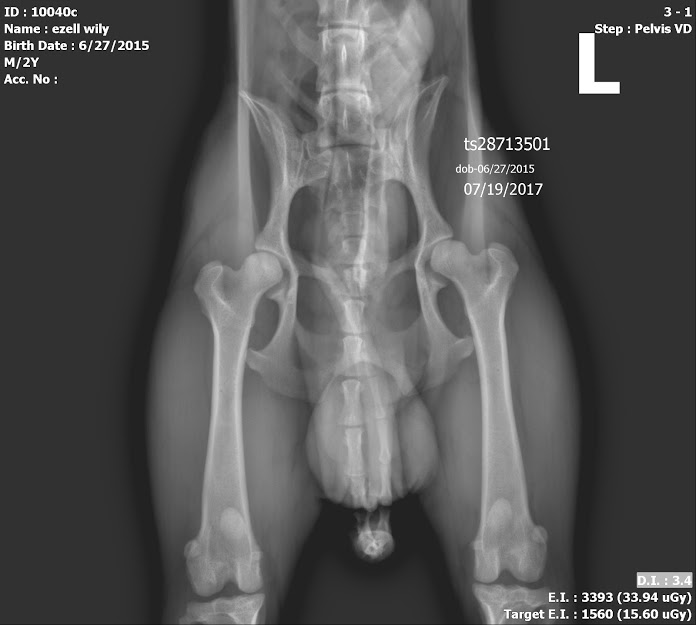
    Sir Williams Radiographs on his hips for his OFA Testing. (Not Covered)

    Is this pet your “child”? It makes a difference in the way we treat them.

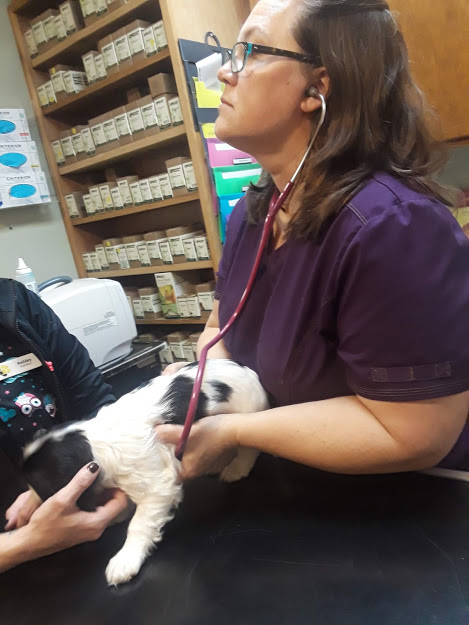
    Little Finn and I await to know the diagnosis of his initial heart exam by my Vet: Dr. Cheryl McDermit at his puppy check (not covered)

    I speak to, e-mail, and blog with hundreds of new puppy families each year. Each and ever one is unique…just like their dog. Some have young families, and some will have an addition to their big furry family, some are bringing them in as a companion in those later years with their fixed income. All of the dynamics need to be explored and inventoried to find the best plan, just in case “something” happens.

    In the years I have been caring for Cavaliers (I have now had 10 Cavalier King Charles Spaniels), I have only had one true emergency which cost me $1000 out of pocket, which happened last Christmas time. We paid for this out of our Emergency Dog Fund. Due to the nature of the problem (she was wobbling and falling and her eyes weren’t focusing – we believe a slight stroke, but was never confirmed), had I not opted to bring her home, the bill could have easily been 10k because of the timing (no neurologists available until the next week – post Christmas – and they wanted to monitor her). Sure I’ve spent about 10x’s that amount in my home kennel due to the nature of breeding, but pretty much everything medical I spend it on would not be covered. For my particular situation, where I have yet to see a dog (in my home kennel) need an exorbitant Vet bill covered, it has worked to $ave and use as need to.

    Due to some of the Cavalier King Charles Spaniel’s genetics and geriatric needs, you will find this breed has some of the more expensive rates on the market. The younger you decide to insure, your rates will be lower. When Willy was a young tyke, I looked into insuring him. I was quoted $50-$100 a month, depending how much out of pocket I was willing to cover. I knew there would be puppy shots and a few tests that first year, but aside from that, I knew I could probably set aside $300 for him and barely touch it. Instead, I continued my search on a healthy, holistic approach to my Pet’s Care. A lot of what I do will come out in this blog. I treat them similarly to how I treat my 2-legged family members and, especially myself. Both warm-blooded mammals, there are some essentials that we all need to maintain a healthy life. Personally, outside of an Exam for a Certification two years ago, I haven’t seen a Doctor in about 7 years. I hope to maintain my health for a very long time! (And, by the way, I use a Cooperative for my Health needs (vs. Insurance). Getting in FRONT of the problems helps…but then, there’s always those once in a great while EMERGENCIES.

    When looking at Pet Insurance, you will need to understand WHAT THE INSURANCE WILL PAY. Some plans will pay a percentage of your Veterinarian bill. Others will pay a percentage of what the insurance company deems “usual and customary” charges for that treatment, which might be less than what your vet charges. You will always be responsible for the remainder.

    Most plans also have a deductible (the dollar amount you pay out of pocket before the policy pays). Some plans apply deductibles to each injury or illness that’s treated. Others have you pay the deductible every year. This site did all the work for you and found the top three companies that provide the best overall coverage: https://www.caninejournal.com/pet-insurance-comparison/

    As a rule, the lower your out-of-pocket costs are, the more you’ll pay for coverage. A lower deductible and higher reimbursement rate lead to a higher premium, while a higher deductible and lower reimbursement rate mean a lower premium…just like our (human) insurance!

    According to the site ValuePenguin , the average cost an owner pays for pet insurance is $43.14 for dogs and $26.77 for cats. And I’ve seen insurance plans are over $100 a month. Getting a policy is similar to getting health insurance for a human. Your pet’s age, breed, where you live and the type of coverage you get is all factored into the insurance rates. Older and larger animals will have some of the highest rates.

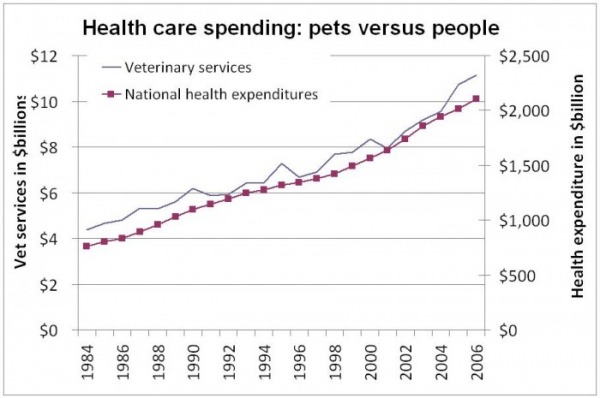
    If you compare those premiums to the average prices of some veterinary bills, the monthly payments may not seem that high. The website Petplan reports that the average bill for a pet that swallows something they shouldn’t have is about $1,755, and joint-related bills average at $3,480. Further, according to the American Pet Products Association reports sales in vet care in 2017 were $17.07 billion and over $18.26 billion in 2018.

    The Bottom Line…you don’t ever want to have to choose to no let Fido have comfort due to your lack of fund$.

    Our sweet Buddy awaits his Exam.

    Imagine your dog getting into your fresh baked oatmeal-raisin cookies, it’s 10:00 at night and he begins to vomit profusely. This on top of your car being in the shop last week and your “Emergency $avings” is no more. What do you do? This is YOUR FUR BABY, your FAMILY MEMBER! Well, there is an option…nooo, not selling your first born to the highest bidder.

    Interviewing our local Humane Shelter Director, Charmaine Rastatter told me recently that there are so many dogs dropped off at the shelter for no other reason than because the pet needed medical attention that the owners were unable to financially provide for. As an ethical breeder, I state in my Health Contract that if someone is ever not able to care for the dog, I have the first “right of refusal”. Meaning, I want the ability to care for the puppies-turned-dogs that were bred and reared in my home. All pets deserve a chance! **

    For a lot of people, they have to use CareNet, the high-interest “Credit Card” which is touted as “insurance” when you are unable to pay for medical bills (for you or your furry friend). On their site I read: For use”On qualifying purchases of $200 or more made with your CareCredit credit card account at enrolled provider locations. Interest will be charged to your account (at the rate of 26.99% for new accounts) from the purchase date if the promotional purchase is not paid in full within the promotional period. Wow! This should help us all make the decision on how we will help our Dog during the rough patches in life.

    **Watch for the blog post “What happens when you HAVE to say good-bye to your best friend, our dog?” Walking through grief. Coming later this summer.

  • It’s Just So Confusing!!

    It’s Just So Confusing!!

    We adore these pets of ours. They are innocent and trusting…and, oftentimes so are we. Its a challenge…Why can’t we all agree on ONE THING to keep our pets healthy and safe? Believe me! I know!!! Between the Vet Office, the local Pet Store, our Breeders (me) and all the other “voices” (on line, my brothers mother-in-laws second neice, you know…). It’s just like everything…there’s a bazillion ways to look at anything. Many people just bury their head in the sand…and then there’s us. The bottom line is that we CARE for these sweet furry family members and we want the VERY BEST for them. So, here we are…knowing that ignorance is NOT bliss! Knowledge is your Power! I want to help you…together we will find the answers YOU are looking for.

    The bottom line is that there is a HUGE market for YOUR dollars. Follow the $ trail and keep doing your own research for your beloved family members. Fortune Magazine wrote an article a few years back (2016) on “Pet’s are Basically People” ( http://fortune.com/2016/09/07/pets-are-basically-people/ ) that we are humanizing our pets.

    Translation = there is a market for YOUR dollar$.

    “Sixty-eight percent of U.S. households, or about 85 million families” (2018)

    https://www.iii.org/fact-statistic/facts-statistics-pet-statistics

    So what is a person, especially those of us on a tight budget or fixed income to do when we want…need our pets? We need to know where to turn for answers! I agree. Believe me. I have worked inside a Vetrinarian Hospital, I have almost always owned a dog, cat, and other animals. I am right with you. I hope to help bring light to the reasons behind the mysterious challenging opinions vs. facts in the dog and pet industry and empower you to continue being that amazing pet owner I am sure you already are! Join me in exploring topics such as: Food Industry, Grooming, Vaccines, Exercise, Parasite, Flea & Tick Regimes, Insurance, Spaying & Nutering, Therapy Animals, Testing for Health, Loss of a Furry Companion…and so much more!

  • To Groom…or NOT to Groom, that is the Question.

    To Groom…or NOT to Groom, that is the Question.

    I tend to observe a furry companion as an extension of self, home and family. Whether it is my pet or another person, of course, we do judge by appearances. Before bringing yet ANOTHER mammal home, I need to ask myself if I have the 1.) time, 2.) patience, 3.) financial means 4.) desire to give to this animal what it needs.

    Grooming is part of the package we all need to look at with an open mind to the DOG’S needs.

    Personally, I was drawn to the natural look of the Cavalier. Having spaniels in the past (Springers), I loved the rugged “Grinchy” feet, long chest and side hair, and, of course, that loooooong, feather-y tail. When I flew out to North Carolina to pick up my blenheim boy, Willy, I was amazed at how little he shed. A quick search on the internet shows these loveys are “high maintenance” and they “shed quite a lot”. Honestly, this has NOT been my experience. Of course, the mild Northwest (U.S.) temps are part of this, but I think a LITTLE grooming goes a LONG way with the Cavvys.

    Me and Willy in his natural state…no groom and not brushed (this day).

    Living with an amazing and wonderful yellow Labrador Retriever who was everything our family could ever imagine…except for the hair, hair, hair…everywhere! And he HATED being brushed!! I could sweep/vacuum a PILE every day. Ugh (where was the “Rumba” when I needed one so desperately?

    Fast forward…now I have 5-6 dogs and puppies frequently in my Kennel Home and I am amazed at how LITTLE I have to keep up on my floors. I attribute it to the FUR on the lab vs. the HAIR on my Spaniels. Both have a double, or under coat. So, what’s the difference and how do I maintain a beautiful home AND dog?

    FUR is almost always short and thicker than hair, (follicles per sq. inch). Fur also goes through a faster growth cycle, and so sheds more heavily. HAIR is generally smoother, longer and finer than fur (which attributes to the “silkiness”). Either can either be straight, wavy, or curly. Both tend to have an undercoat that needs to be combed out regularly to stay on top of the fur bunnies in the corners of our dining room.

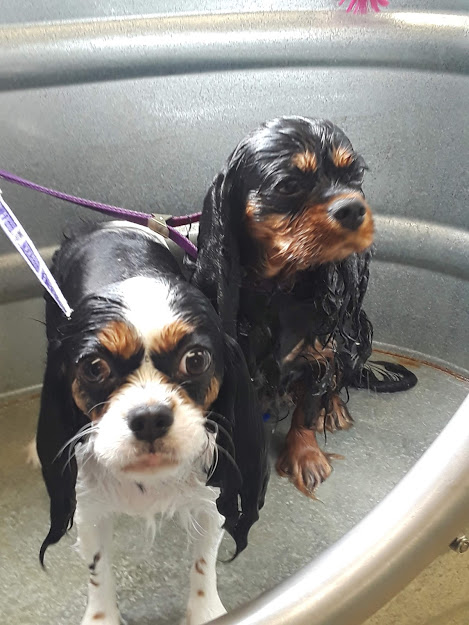
    Mercy and Elysha don’t mind their monthly baths.
    We treat it like a day at the “Spa”.

    People inquiring about puppies or the breed ask me how much maintenance is involved with the upkeep of my lovely dogs. I always ask them “when is the last time YOU think I brushed or washed this dog”. They usually say “today”. Nope, most likely it was last WEEK and bathed last MONTH.

    After our monthly grooming “Spa Day”, too tired to keep their eyes open.

    The Cavalier King Charles Spaniel Breed Standard, aka: what is acceptable to Judges around the world may be different than what YOU prefer. The Standard is NO thinning or trimming, except for under the paw pads, not the hair around the feet though. Take an inventory: Do you live where burrs and mud can easily get under the coat of the dog and between the paw pads? Is my boy not quite “lifting” high enough, therefore I need to keep his belly trimmed tight? Are my pooches eyebrows and whiskers out of control and need a little trimming? YOU are the Judge of your own sweet furry companion. I’m here to help YOU.

    Most of us like the “look” of the beautiful Cavalier, but not the weekly maintenance, so this is how I keep my furry friends looking so sharp. I pick A DAY that works for me each week and go over them thoroughly: 1.) a good comb (known as a pin brush or de-matting “rake”) to help with the daily/weekly snarls. Deal with them asap so you don’t have to CUT. This is a good time to utilize that flea comb (more on Fleas: ) 2.) Use an electric trimmer to get in and around the paw pads when needed (think spring and summer). During the MUDDY winter months I trim around the front and tops of feet, especially for the ones who despise me wiping too much (see above picture). I also SHAVE the underside of the ears and trim up the long feathers that you don’t see when the ears are down (see above). I will address ear care and treatment on another blog. This is also a good time to remember those toenails (and dew claws) I’ll address this one later as well. 3.) Brush the undercoat with a shedding blade or undercoat rake. You may need to LIFT the top layers in order to properly brush out the undercoat. I have several brushes I use for this and will be adding to comments soon. 4.) No more than once a month give a nice warm bath (any more, that nice sheen of the natural oils may be harmed). Peanut butter on the side of the tub so your dog can lick helps those who might not enjoy their bath time. 5.) When fully dry (some like to use a hair dryer on lowest setting, be sure to wipe ears and be sure all moisture is gone) use a slicker (boar hair) brush.

    Should I shave my dog during the summer?

    Clipping or shaving a Cavalier’s coat (some refer to this as the “Puppy Cut” might seem like the best approach to keeping your dog cool.

    Image provided by http://www.Rover.com
    • The longer topcoat hairs actually protect your dog’s skin from the heat and sun. It’s like an insulator.
    • Your pet’s topcoat provides a water shield, keeping the skin and undercoat dry as well as provides protection against mosquitoes and other insects.
    • Your Cavalier’s coat may grow back thicker and curlier, rather than returning to the long silky coat most admired in this breed (this is a bit controversial and could be different based on YOUR dog). The “Puppy Cut” (apx. a Size 7 Blade all over) is most common throughout the world to keep the hair manageable.

    In short, clipping your Cavalier’s coat short may actually increase the risk of sunburn and overheating – the opposite of what you intend! I keep fans going and have the cooling mats around the house. Most of our home and yard have several “cooler” areas (we don’t need a/c except for a few days in the summer). I’ve even used an old fashioned “swamp cooler” (fan blowing over ice) for the dogs when I felt it was needed. We have a kiddie pool in the backyard filled with fresh water and sometimes they will even wade in it. No shave needed!

    Is a Professional Groomer Necessary for this Breed?

    If what I explained above seems like a LOT for you and your schedule, then you need to find a Groomer who you can work with. I start by sharing this picture I found on the “Cavalier King Charles Spaniel Stomping Grounds”. It’s one of a few drawings that I use as a guide – and I give my preferences as well:

    I’ve taken my dogs to a Groomer ONCE. She was wonderful with all the dogs and did a fantastic job with them. I was getting ready to do some traveling with my five (above) and did not want to take the time, in addition to packing, etc. I liked it so much, I think I will make this my spring and fall “treat”. We were the only one’s in the Groomers area, they weren’t kept in kennels, they had a play area and truly seemed to have a good time. Like breeders, finding a good Groomer takes time and interviewing to find the right one for you.

    Find a picture of a dog that you like and bring it in. It will help you to communicate to your Groomer – truly they want to do what YOU want them to.

    What has been your biggest challenge about grooming your Cavalier or dog?

  • Fleas, ticks and other Parasites…it’s getting itchy in here!

    Fleas, ticks and other Parasites…it’s getting itchy in here!

    Our humble abode with our youngest and “Queen Mercy”.

    We have spent a lot of time “Summer-izing” our yard this past week. Many hours of weed pulling, weed whacking, John-Deering, sprinkling powders and natural sprays and, in general, preparing ourselves for “that time of year” when the little pests want to jump on us, our 4-legged friends and reap their havoc. This Post is to help you “weed” through the truth of these varmints!

    Everywhere we go, there are ads for the collars, sprays and gels to fight these parasites. Parasites are one of the most common health problems that our animals will face. The most common parasites are fleas and ticks while others include intestinal parasites like roundworms, tapeworms, hookworms, whipworms and heartworms. I hope to help you navigate through all the commercialization and streamline the mystery.

    How Can We Prevent Parasites?

    Preventing (“ounce of prevention…”) fleas and ticks is easier than ridding yourself of an infestation, so taking precautions is the very best method. There are a number of ways to prevent fleas and ticks, and it’s best to approach protection and prevention from multiple angles.

    Firstly, the very best way to keep fleas and ticks away from your pet is by keeping your home, yard and pet clean and clear from being the kind of place these varmints will want to land in.

    Last fall the FDA put out a warning against the topical and oral medications due to many reports of seizures and even deaths. The high probability toward adverse reactions make these a terrible option for our beloved furry companions. A short Google search will show you more than you want to know about what has become all too normal. Here’s one link to adverse reactions that have been linked to the top sources of flea medications (I’ve been following the petitions and challenges for several years: https://www.isbravectosafe.com/bravectotruefacts.htm

    There are better, less expensive ways !

    So, do you want to know what have I done to ward against these pesty varmits? I plant rosemary, and lemon balm around the perimeter of our home. After a good mowing and weed-wacking (like yesterday), I will sprinkle Diatomacious Earth all over the lawn, flower beds and anywhere my dogs spend time. More about DE here: https://richsoil.com/diatomaceous-earth.jsp I also purchased the yard and lawn care concentrate from Wondercide (uses a high concentrate of Essential Oils) and sprayed the perimeter of the yard: https://www.wondercide.com/outdoor-pest-control/outdoor-pest-control

    We pulled up ALL carpets and removed fabric-types of furniture this past winter, so keeping those little buggers off the floors and main sitting rooms should be easy-peasy. I washed all the pet beds (twice a month) and have sprinkled cedar chips in and under their beds. Just like outside, I diffuse EOs (Essential Oils) such as lemon, eucalyptus, and rosemary in several places in my home. Not only do I NOT use toxic chemicals in my home, I use e.o’s to clean counters and floors and around door frames helping keep fleas as well as mosquitoes at bay. Bathing the dogs (apx. once a month) using any one of the EOs above as well as Neem Oil helps externally. I also think of keeping the INTERNAL parasites away as well is simple:

    Put Your Pet in a High Alkaline State

    It’s easy to check the ph of your pet using the Alkaline Strips. 7.0 and higher does not draw parasites, in fact, some people believe it might deter them. How do I do that? Read on…

    First of all, I have done a LOT of research about the pet food industry and I am convinced that for the health and well being of my dogs, I now grind and feed my pets raw meat fruit and vegetables. In addition, I add apple cider vinegar to their drinking water. Yes, it’s just that easy. For the internal parasites, I grind a few natural sources (pumpkin seeds and black walnut to name a few) to add to their food (added bonus, it helps with expressing the anal glands as well). See this site for more ideas: https://www.top10homeremedies.com/pets/home-remedies-intestinal-parasites-worms-dogs.html When I take my pets to the Veterinarian, I am sure to bring a stool sample to have them test and make sure I am being thorough. So far, we are doing great!

    Dealing With A Current Infestation

    If you already have experienced a flea problem, it’s important to act fast to get rid of it. Fleas multiply at a rapid rate and the problem gets worse by the day. Fleas do seem to like the sweetness of puppies, and you should be extremely cautious when applying ANY medicines or even essential oils to puppies under 6 months (use a flea comb daily to remove nits/eggs and larva).

    Look around your home and yard with a keen eye for places that parasites might be lurking. Things like wandering cats and dogs, keeping garbage locked up tight to keep out rodents, etc. and by keeping your yard mowed and free of tall weeds or grasses will deter any little bugger!

    Late Spring and early summer are good times to remember to protect your home and yard!

    Regularly Check Your Pets For Fleas And Ticks

    I comb and groom my pets a few times a week (call it therapy for me), but Friday Nights have been my “Weekly Routine” to check each one thoroughly with a flea comb (in addition to cleaning ears, teeth, nails, etc.) Regularly check for signs of fleas, ticks and parasites (yes, you HAVE to look at the poo!). If you live in an area that is tick-prone, and if your pet spends time outdoors, you’ll need to check for ticks regularly, as they are carriers of diseases for both animals and humans. And, of course, when we are expecting puppies and having those little ones in our home, we are extra careful to comb and rid any and all pests, combing daily.

    Bella enjoying her pre-labor “spa time” on my bed.

    This map shows if your area is prone to lymes disease:   https://www.petsandparasites.org/parasite-prevalence-maps#2019/all/lyme-disease/dog/united-states/ Even though I live in an area that is claimed to not have any reports of lymes from ticks, I do know that Deer ticks are alive and well in our area. I personally know several dear friends who have suffered the horrid disease. Remembering that a little effort goes a long way, I will do what it takes to protect all my loved ones! Should you remove a tick from your beloved furry family member, its easy to put in a zip-lock baggie and bring into your Veterinarian to test for lyme.

    Remember, it’s easier to prevent the challenges in our lives as well as the lives of our pets rather than peddling backward. If you choose to medicate, please do your research before giving to your pet, no matter what way you choose to protect. Choosing NOT to protect is also an option…remember, it’s your choice. Have you used another method that you believe really works? Please let all of us know!