Tag: Cavalier King Charles Spaniels

  • Allergies and Pet Itchies

    Allergies and Pet Itchies

    Our lab Samson was fun and playful, but his night time scratching would keep us awake with the rattling of the floor.
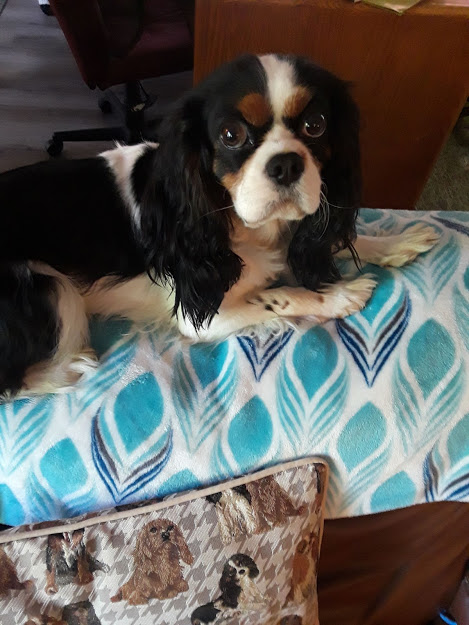
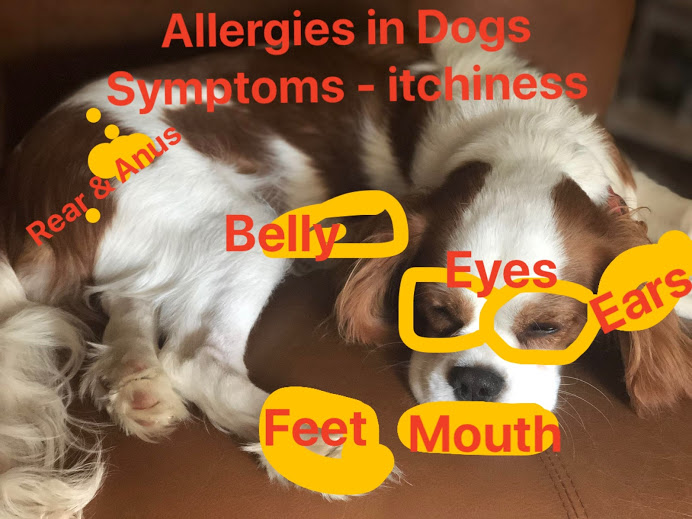
    Our model Breve (1/17/20) shows us where the typical allergy issues show up.

    Thump, thump, thump…no matter where the dog is, when they are itchy, it seems EVERYONE suffers with him. Samson, our lab seemed to suffer especially in the late spring, early summer. His ears would be red and inflamed, and his hind-iney was a big “need to scratch” area as well. We worked on his food, baths and a lot of natural products…nothing seemed to work…until the Vet gave a prednisone shot for his “Otitis”. A few years later, the Vet gave me a large dose of Prednisone tablets. At the earliest sign of that summer allergy, I would give 1/2 tablet and try and stay on top of his suffering.
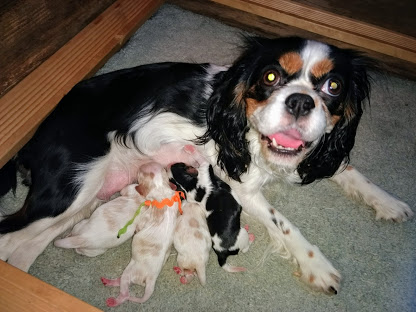
    Mercy’s hormonal itching typically dissipates after whelp.

    Mercy didn’t have issues except right before delivering puppies. Hormones also play a big part in the challenges of itching…and for her, there’s not a whole lot I am able to do for her…except time her contractions.

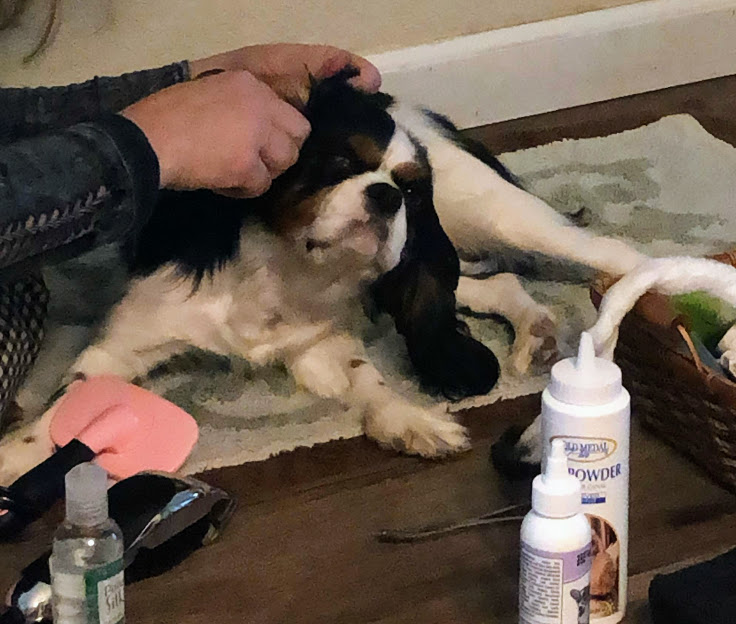
    Lovely Lovie’s post-bath and grooming ears.

    Pets often suffer with allergic otitis and dermatitis for a plethora of reasons. Your fur-baby may lose weight from the constant motion of scratching and rubbing. Sometimes the problem can be easy and cured with a few little things you have around the home, or, in so many cases, it will take years and a lot of expense to determine what is bugging little Fido!! I hope this article will help narrow the possibilities and expand your understanding of the mystery behind allergies. Allergy is defined as “damaging immune response by the body to a substance, especially pollen, fur, a particular food, or dust, to which it has become hypersensitive.” If you haven’t done so before now, be sure to read my blogs on ear care, which could also help with determining issues in those floppy ears: https://lifewithcavalierkingcharlesspaniels.com/spaniel-ear-care-part-1/

    There are three main culprits for allergies: environment, food and parasites, so similar to us humans!

    This may seem a little over the top, but in order to rule any of the possibilities of allergens out, you will need to keep track of the whens and whats in your fur babies life. I keep a Google Calendar on my Smartphone and have each of my pet’s in a color code to make it easy at a quick glance to see any important event, as well as be able to talk with your Pet Professional about the challenges.

    ENVIRONMENT: Does your dog ever “chew his paw pads”? Is your dog constantly battling with red skin and itchy? That’s one of the big red flags of environmental toxicity. Although pets can also experience hair loss, skin infections, sneezing, watery eyes, vomiting and soft stools. Here is a list of things he could be reacting to: floor cleaner (toxins), aerosol sprays, laundry soaps and dryer sheets, pesticide/herbicides, flea bites, molds, lice or mange. Definitely take a look at each thing one at a time and remove from his home completely (forever).
    DIY Air Fresheners

    TIP: 1/4 Cup Vinegar for a quart spray bottle (filled with water and a few drops of citrus essential oil) makes a fantastic cleaner as well as a foot soak, should your dog be needing a relief from his paw itchiness. I like to take a teaspoon of organic coconut oil and massage into his skin, its anti-fungal, anti-viral and anti-bacterial – it can bring comfort and heal. Also, if you enjoy the plug-in air refresheners, you might want to do something like I did: get the Plug-In type, dump out the liquid that is in them and add your own essential oil (1-2 drops is all that is needed) https://amzn.to/2QgovK3 Other things that could help is: detoxing, acupuncture and massage in order to boost your furry companions body.

    FOOD: Has this itchiness come on suddenly? A good thing to consider is a change in his food. You may be feeding the same thing, but Manufacturers are constantly changing recipes without your knowledge. Be sure to learn how to read the labels and if you can’t pronounce it…toss it! A limited ingredient pet food is a good way to begin looking at food as the culprit. As many of you know, I fish, garden and hunt for the majority of my pet’s food and when I’m looking at a new itchy dog, often it’s due to my negligence in this area. Other than being very itchy, food-related allergies can leave a dogs fur quite brittle in addition to sparse. If there are skin issues, I am sure to use a comforting oatmeal-type bath and shampoo such as this:https://amzn.to/3ldeqvk Here’s another plug for organic coconut oil is to feed a teaspoon each day. The MCT (Medium Chain Triglycerides) job is to boost the immune system. I personally use, as well as feed my dogs this MCT Oil: https://amzn.to/3hkYTaM
    Recently my year old Faithie was biting at her legs and paws. When I took the time to think through her diet, I realized that I had not skinned several pieces of the chicken that I used in her raw, ground food. It is my (not supported by proof) belief that it is not the chicken that many of our dogs are allergic to, but what the chickens are fed and then the bi-products of the chicken that is put into the food (such as my example above as well as feathers which is often found in kibble). Dr. Judy Morgan reminds folks that healing the gut is critical and necessary if we are ever to get on top of pet’s allergy issues: https://drjudymorgan.com/blogs/blog/you-cant-solve-allergies-if-you-dont-fix-the-diet?_pos=1&_sid=7addc8f07&_ss=r

    Tip: Hemo-Pet has a fantastic Food sensitivities and intolerances test that is both thorough and economic. For a great article and video click here: https://healthypets.mercola.com/sites/healthypets/archive/2011/07/26/a-great-tool-for-dogs-with-rumbling-tummy-gas-diarrhea-or-vomiting.aspx or, just see the page: https://hemopet.org/dog-and-cat-nutriscan/?utm_source=google&utm_medium=cpc&utm_content=nutriscan&utm_campaign=adword&gclid=Cj0KCQjwhIP6BRCMARIsALu9LfnLKeck8Ntwi5v24O5lSrsqT_4okiQPDV4WSPJ1lvdEWB6sCoTvov0aAh0dEALw_wcB

    Tip: No Bake Itchy-Be-Gone Treat Bites

    Mix Together and Roll (in powdered peanut butter – optional) into 1 Tablespoon cookies, refrigerate and use in a week or freeze: 1/3 cup MCT (or coconut oil), 2 Tbsp Pumpkin or Unsweetened Applesauce, 2 1/2-2 3/4 cup ground oat, spelt or quinoa flour, 1/4 cup Natural Peanut Butter

    Parasites: I cover most all that I possibly could in the blog I wrote: https://lifewithcavalierkingcharlesspaniels.com/fleas-ticks-and-other-parasites-its-getting-itchy-in-here/ If you have any further questions, don’t hesitate to ask!


  • Spaniel Ear Care 2

    Spaniel Ear Care 2

    Even with weekly Maintenance, there may be times where your furry companion may need a little extra TLC – he may develop PROBLEMS with his ears. It is my hope to help you prevent problems and care for your dog at home as much as possible. Dogs with ears that stand up have more air flow which keeps them drier, but floppy, fuller ears require more care and attention from you.

    Quite adventurous and active, Willy enjoys boating, hiking, and playing outdoors. Regular Ear Care is critical to keep him happy and healthy.

    Particularly taking heed of ears after a time of swimming, snow play or even bathing will allow you to keep your dogs ears clean and dry. Only clean the outer ear canal. If the ear canal looks abnormal, clean and be sure to consult a vet.

    How to Prevent Dog Ear Infections

    Every dog has a bit of yeast growing on their skin and in their ears. Most of the time, the body is in balance and the yeast will cause no great problems. But if this balance gets upset, your dog may get a yeast infection throughout his body and it would be easy to detect in his ears.

    🐾  A healthy dog is better able to fight off and recover from ear infections. Keeping his immune system in good shape by feeding your dog a healthy diet that has good vitamin and minerals will make sure he gets all the nutrients he needs. Give him lots of exercise with daily walks, playing catch, or organized day care. Every part of the dog’s body, including his ears, will benefit and he will sleep better and be more obedient when he is tired. You probably know that for a kibble, I recommend the Life’s Abundance for All Life’s Stages; all my recommendations are found on the Recommended Products Tab here in my blog: https://lifewithcavalierkingcharlesspaniels.com/recommended-items/

    🐾 What your dog puts into his mouth affects his ears. Allergies in dogs often show up as itchy ears (and skin) or an ear infection. A dog eating a poor quality food is much more susceptible to ear infections, fleas, and all kinds of parasitic infections. Allergies tend to cause inflammation and infection in and around the ears. These changes in the ear canal can cause an imbalance of bacteria or yeast and cause an ear infection. Especially if your dog eats an inferior quality food or has ingredients he is allergic to. Getting the gut in proper ph balance will help every area of his body. If you need to help your pooch fairly quickly, I always recommend apple cider vinegar in the water bowl (1 tsp/quart) and feeding tripe. Particularly surrounding vaccines, deworming or antibiotics, using this regime in addition to a high quality probiotic will help the microbiome of your dogs gut.

    Ear Infection Symptoms

    If your dog has any of the following signs, he may have an ear infection:

    Mercy – my Himalayan Cat-Dog on her favorite perch…behind where I like to lounge.

    🐾 Ear discharge, may be yellowish or black (different than waxy)

    🐾 Smelly ears, different than your dog’s normal smell

    🐾 Frequent head shaking, pawing at ears

    🐾 Rubbing head on the ground, furniture and other objects

    🐾 Red ears, tender ears, irritability

    🐾 He may seem dizzy or uncoordinated.

    There are natural balances of both yeast and bacteria inside your dog’s ears. Sometimes these balances are offset and an ear infection, unfortunately may occur:

    Bacterial Infection

    Bacterial infections in dogs are more common than yeast infections. They are usually recognized by an strong odor coming from the ear, usually accompanied by a strong smelling discharge.

    The ear may be red and swollen, and your dog may indicate he is in pain. He may shake his head as another indication. Moist, warm conditions, with little air movement are the ideal environment, so dogs with floppy ears can be especially prone to them.

    Yeast Infection

    Yeast infections are recognized by redness, scaly or dry patches and extreme itching. There may also be a chalky smell to the ear, as well as some discharge.

    A yeast infection can be transferred to other parts of the body. A dog who scratches his ear may then transfer the infection to his feet, or it may spread to his face. The extreme itching may cause the dog to scratch so hard he creates sores in the ears, which may then cause a secondary bacterial infection.

    Treatment for Canine Ear Issues:

    If your dog exhibits these symptoms, take him to the vet for diagnosis and treatment especially if he hasn’t had an ear infection before.If your dog gets chronic infections you may be able to treat him at home, but always follow your veterinarian’s instructions.

    If you’re sure he has an ear infection, and not ear mites (small black clumps that resemble coffee grounds or tiny white, moving particles) or some other problem, there are some home remedies to try first.

    Chronic ear infections are often associated with allergies, typically resolved by a good diet, enzymes and probiotics.

    🐾 Consider using Zymox Otic , a non-prescription treatment containing enzymatic anti-microbials. One daily dose of Zymox cleans, medicates, and may prevent your dog’s yeast overgrowth. It is available as drops, cream, spray and ear cleaner.

    🐾 I add a bit of Apple Cider Vinegar (with Mother) into the dog’s drinking water (apx. 1 tsp. per quart of water) just to keep the dogs more alkaline.

    🐾 Continue to keep the dog’s ears clean 1-2 times a week.

    Specific Difficulty Related to the Cavalier King Charles Spaniel’s Ears:

    Primary secretory otitis media (PSOM) – This disorder is also known as “glue ear” and could affect up to 30% of Cavaliers. Unseen, therefore, difficult to diagnose, a very thick mucous plug fills the inner ear behind the ear drum, causing it to bulge. The disorder can occur at any age. Symptoms may include excessive yawning, guarding of the head and neck, head tilt, head rubbing, crying out in pain, wobbly gait, drooping ear or lip, inability to blink an eye, rapid eyeball movement, facial paralysis or nerve palsy, drooling, vestibular disease, some loss of hearing, seizures, and fatigue. Affected dogs will scratch at the affected ear(s), which makes diagnosis difficult, as symptoms are similar to SM and CM. Diagnosis is made with MRI or CT scan. Treatment involves surgery to open the ear drum. Tubes may be inserted to allow the mucous to drain. Severely affected dogs may need ear canal ablation (removal). For more information, please read: http://cavalierhealth.org/psom.htm

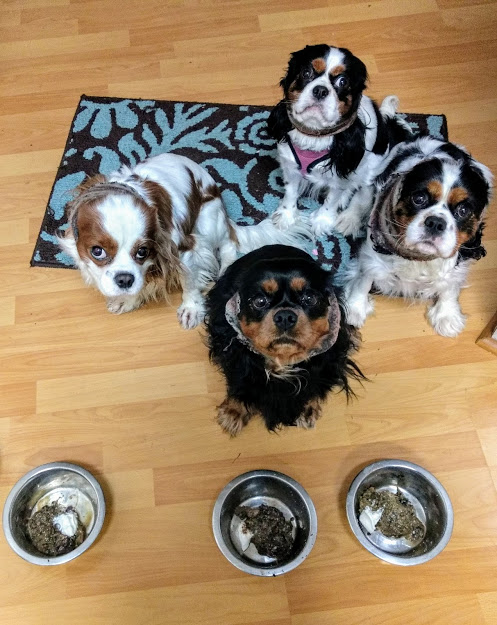
    Particularly when eating a wet or messy food, it is important that the Spaniel’s ears are protected. I made these “Snoods” long time ago from an old sweater’s arms.

  • Spaniel Ear Care – Part 1

    Spaniel Ear Care – Part 1

    Weekly Maintenance of their Long Floppy Ears should keep the atypical problems at bay. Keep reading for a Step-by-Step How-To Guide:

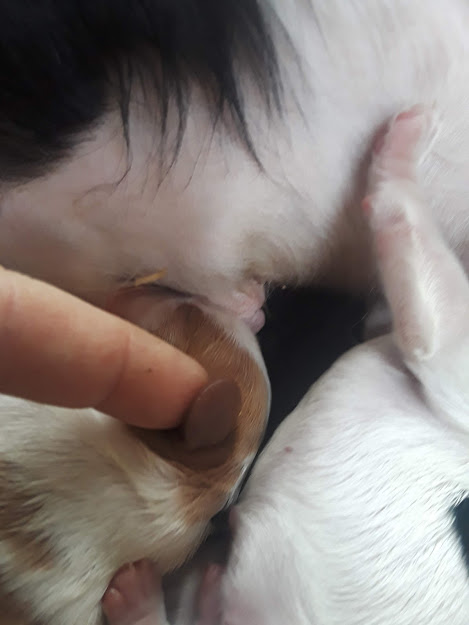
    One week old puppy’s ear canals aren’t open. Look how tiny these ear lobes are!

    Each Friday evening I find a good Rom-Com and a nice big icy beverage, curl up on my leather couch and plop down. Invariably, just a few moments later a fur baby or two will be snuggled up against me, they are like puddy in my hand. A basket that I keep handy with all of my doggies grooming tools is nearby; taking care to spend at least once a week on the teeth, nails and ears. Research shows that 30% of all Veterinary Visits are due to itching, achy, uncomfortable ears. Let’s learn a bit more about this so we can decrease those “urgent” visits.

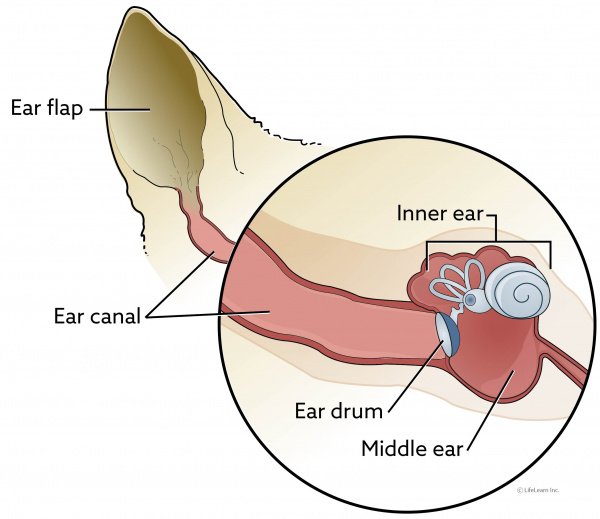
    Image Provided by VCA Clinic

    At apx. 3 weeks of age, puppies develop their sense of hearing. From newborn, it is important to get the puppy/dog comfortable with their human looking in and feeling all around their ears. If you look at this picture, imagine your dogs ear (flop) being pulled straight up. We are primarily concerned with the care of the outer ear, nothing beyond the ear drum.

    Get your puppy/dog comfortable with you touching, rubbing and cleaning those ears ASAP!

    1.) Inspect your dog’s ears regularly (daily for awhile, just to keep him comfortable with you lifting, rubbing and wiping. Be sure there are no signs of infection, most of the time you will only need to do a quick clean.

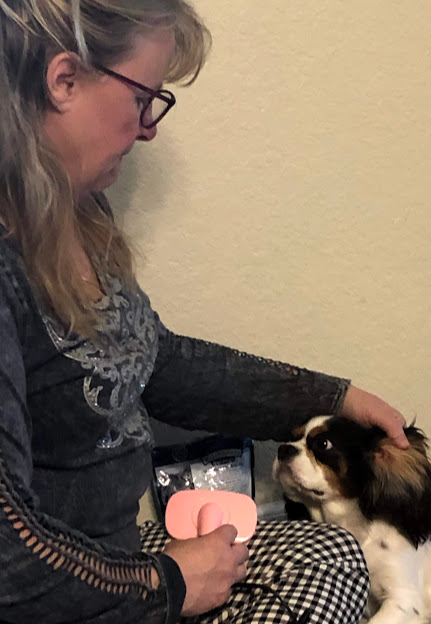
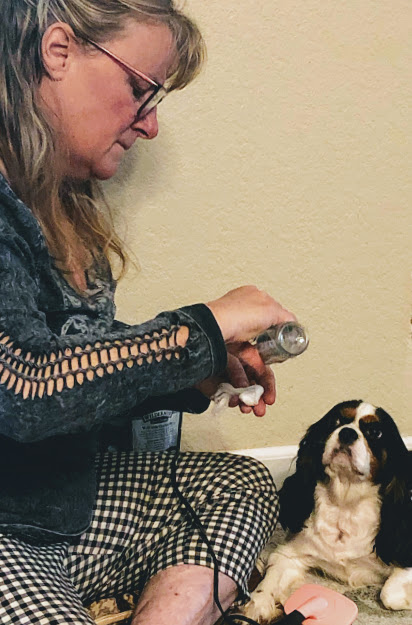
    2.) Weekly, I clean the ear with a Cotton pad and cleaner. This technique works well if there is only a little visible wax or dirt, and keeps your dog’s ears in good shape. Here’s how:

    Mercy knows its time for a bit of grooming.

    🐾  Hold on to the tip of the ear and lift to open the ear

    🐾  Use a cotton pad or soft cloth and wipe the exposed portions of the ear. I use a mineral oil with a bit of tea tree essential oil but sometimes if there is an “off” smell I will clean with 1/3 Apple Cider Vinegar 2/3 water spray. *See Ear Problems in next blog post.

    🐾  Wrap the cotton around your index finger, and insert finger a short way into the ear (not more than 1/2 inch). Gently wipe to remove wax and dirt.

    🐾  I like using a Preventative Ear Care Formula to keep the Ears in Tip Top Shape. Please Refer to my “Recommended Items for a few ideas”. I am using the Life’s Abundance All Herbal Ear Care here now and have never had an ear infection. https://bit.ly/39STOla

    🐾 Repeat on the other side and you’re done!

    3.) I like to keep the underside of the ears clipped very short to keep moisture and mats at bay, particularly during the wet months – here in WA from Nov through March. Here’s a 1-min. video showing how I do mine very short: https://www.youtube.com/watch?v=D3ZB_O9d0l8

    4.) Most Dog Groomers will be able to care for your furry loved one and alarm you to any special needs s/he might have. I recommend finding a groomer who knows and understands the breed and who will work within your perimeters. Personally, I am able to do the weekly/monthly maintenance and typically take each of my dogs in 2-4 times a year.

    Mercy – after her treats and happy ears, teeth and feet!

  • Things don’t always go as planned

    Things don’t always go as planned

    How do you know if you chose a poor-health puppy? Are there signs and symptoms?

    In honor of Hannah:

    Donna Shelly and her 8 year old, Miss Hannah, 3 weeks before passing.
    “They are the best dogs, with the worst problems, but I loved my Cavie more than any other pet I have had in my life, and I’ve had several. “

    Part two of my “Puppy Mill” series (Part one is here: https://lifewithcavalierkingcharlesspaniels.com/puppy-mill-or-reputable-breeder-how-can-we-really-tell/) is to help open the conversation and importance of NOT giving time or $$ to those people who are not distinguishing themselves by doing the things it takes to have a HEALTHY dog. I met Donna (above) on one of our favorite Facebook groups, “The Healthy Cavalier King Charles Spaniel”. https://www.facebook.com/groups/1567669240154735/ Quick to encourage others and praise their “beautiful babies”, Donna is now, herself, going through the recovery process of loosing her favorite fur-baby and in process of waiting for her next furry companion to join her. The following is some of the direct quotes from our conversations that I feel would benefit many of us who love our dogs:

    “Hannah’s MRI showed DM (Degenerative myelopathy) basically degenerative disks in her neck and improper alignment into the stem of her brain. The neurology vet stated that unfortunately it is becoming more common in many dog breeds not just Cavies… Hannah had been quite sickly all her life, with pancreatitis, various infections, including one in her mouth requiring major surgery.”

    Kalama Cavalier notes: Degenerative Myelopathy is an inherited genetic disease (shown through DNA) which frequently will not appear until around 8-10 years of age.

    Donna goes on to say, “Her recovery from the mouth surgery was really slow, and she had a lot of vomiting, which my Vet always thought was a “sensitive stomach”. 2 years later, I learned it was one of the DM symptoms. One evening, after having been to Vet the day before, and getting medication for the “sour stomach” she started losing use of her legs, and I could tell she could not see. She was glassy eyed, afraid to try to move, was falling over, and I could tell she could not see inches in front of her face. Immediately put her in car, and looked up emergency vet. Shortly after I arrived she started having seizures. I authorized an MRI for the next day, which is where I got the actual diagnosis.”

    “I literally watched by dog go from what I thought was healthy to a horrendous state in 3 days. Any hope that she could recover enough to be happy was worth the chance.”

    Donna Shelly

    “I did not have insurance (I will for my next dog !!!!) A Cavalier is definitely an expensive breed when it comes to health upkeep. That surgery was nearly 3 years ago had about a $3500 price tag, including her first cardiology testing, in prep for the surgery. The Vet bills for her last 6 weeks totaled about $6500. $600 for cardiologist annual visit/ ekg, etc. She had dental work about a month prior also. Then tests run by my Vet, who was going to do more tests following week (she did not make it). The MRI was $2500, which was included in the final summary at the Emergency hospital, a bill of about $5500. The first thing the the neurology Vet told me after the MRI was that Hannah had a congenital defect, and there was nothing I could have done to prevent it.

    “This was Hannah about 60 hours before she passed.
    This was sitting at my regular Vet waiting for results of blood tests.”

    “To complete my story, the neurology vet indicated that she was hopeful that she could treat Hannah, but due to fact that her heart was getting bad (cardiologist had just put her on Vetmeden a month earlier), a primary treatment was to incorporate steroids. She could not do that due to the heart issue.

    “Hannah had a treatment to reduce brain swelling with a drug that is a kin to a lose dose chemo drug. However, early the next morning she had 2 seizures in a very short period of time. The second left her in an irreversible coma. The question I had been asking for those last 24 hours, was “what would be her quality of life” if we got her through this. Bottom line, when they called me in when she lapsed into the coma, she was struggling for every breath. I spent some alone time with her, talking to her, telling her how much I loved her, and how she did not have to be brave for me, that it was ok to let go. I stayed strong for her during the process. I was at peace that she was no longer suffering, but I had, and still have all the horrendous feelings of grief.”

    When talking to Donna Shelly about the challenges of owning Hannah and what she will do differently with this new Cavalier King Charles Spaniel puppy that she is waiting for, she was quick to let me know that she looked for a reputable breeder who is adhering to all the “Club Standards” and more: testing heart, eyes and even DNA checking. I am certain that Donna would find solace if only someone can learn from Hannah’s early, untimely passing.

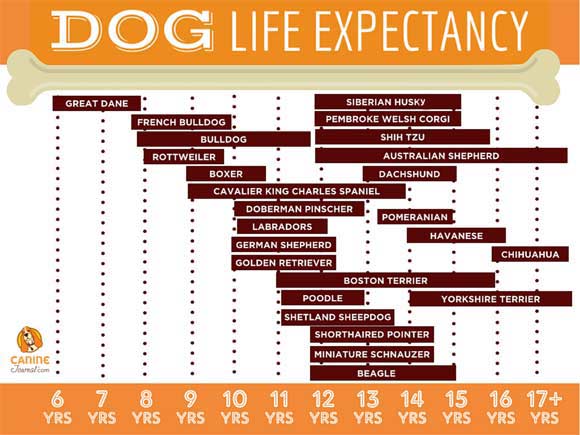
    A short internet search will show that the Cavalier’s life span is on the middle of the spectrum.

    Not a day goes by that I don’t see the sad stories, the stories that I believe could be changed, the reason I am committed to sharing my knowledge with the world of Cavalier King Charles Spaniel lovers. I want to see these compassionate souls on the right side of the spectrum, hearing stories of them living 17+ years – here are a few from today’s Posts:

    ” My 7 yo Ruby has bad arthritis. Vets wanted Rimadyl but I have not started yet giving Cosamin for now. Any other suggestions?”

    “My poor Ben had to say goodbye to yesterday from his first day nearly 11years ago to his last day sitting on our door step looking out I just know yesterday he was giving up he put his paw on my hand and his head on my shoulder and gave me a lick like he was saying goodbye his heart was under a lot of pressure he was gone off food and lungs full of water I could not let him suffer i knew what was coming 2008 to 2019 such a loyal buddy 💔💔💔”

    ” Our little Maddie sleeps most of the day now. It’s been a little over a year since the dreaded MVD diagnosis…”


    ‎”I wanted to share the importance of buying your Cav though a reputable breeder. I bought Blue four years ago and took him to the vet due to pain he was feeling. He was diagnosed with front elbow problems due to splitting of the joints. Both front legs have now been pinned. He also requires surgery to his back knees and has hips dysplasia. The worst condition is a narrowing of the opening of his skull where the spine connects. This is potentially terminal due to the amount of pain he feels. He is now on daily medication to reduce the amount of cerebral fluid allowing normal movement. He’s doing ok but I fear for his future years.
    Always do your research and beware of back yard breakers. I made this mistake.” Rob Harty on September 8, 2019

    This article describes many of the common Genetic issues Cavalier King Charles Spaniel’s may develop: https://www.caninejournal.com/cavalier-king-charles-spaniel-health-problems/ But if you dig a little deeper you will note that nearly every one of the issues can be TESTED to show whether the parents have had the genetic health problems. After studying the 4+ line generations (to ensure there is a proper space from in-breeding), I then look at all of the (required) tests https://embarkvet.com/health-list/

    I have to go through the same channels anyone else does when finding a good, healthy puppy and I am quick to share these “tools” with those who are looking for healthy puppies. After interviewing a Breeder (these are great questions to start with: https://www.akc.org/expert-advice/lifestyle/questions-to-ask-your-potential-breeder/), I want to find out how many generations this breeder has owned from the puppy (or dog) they are selling. The longer the heritage, the better chance they would know whether there are problems from the line that this breeder is using. I just spoke to yet another Breeder who thought her lines were “clear of DM, but was frustrated to see that the last dog they tested showed a carrier for DM”. As a Breeder who is weeding these issues out, I will continue to strive to Breed ONLY HEALTHY (health-tested) dogs. It’s hard. I just retired my 8th dog (prematurely) in just over 8 years. Every one of these dogs were less than 5 years old. As soon as there is a problem (genetic or other), I will look for a family for this dog to grow old with. S/he will not be a Breeding dog if there are possible inherited issues. Just this week I had to make that very hard decision to place one of my sweet girls in a different home because of some mysterious issues that has removed her from my breeding program. It all boils down to the health and wellness of the puppies I am responsible for.

    Me with sweeties: Tucker & Daisy tonight.

    If you follow my Instagram https://instagram.com/kalamacavaliers/ you will only see HAPPY, sweet, beautiful Cavalier King Charles Spaniels. I adore each and every one of them. So, you might wonder, why would I write such a “downer” blog? Well, I really want you to know that I will research and I will report as balanced and unbiased as humanly possible. Before Posting (and even afterward) I welcome a select group of Editors to critique my writings. I want to help YOU, the public know, ultimately, how to raise a healthy, happy Cavalier King Charles Spaniel. I hope this blog will show you how!

    Post Script: As I was finishing the edits on this blog my friend, Julie and I were talking about her precious 9 year old Sadie who crossed the Rainbow Bridge, far to young, yesterday. We cried together and shared memories of her beautiful girl. I pray this blog as well as those in the future will help give our dogs a longer, healthier life. RIP Sadie Girl

  • Puppy Mill or Reputable Breeder? How can we really tell?

    Puppy Mill or Reputable Breeder? How can we really tell?

    There are many ways to bring a new furry four-legged friend into our family: going to the Humane Society and choosing a dog (“rescuing”); the local Pet Store usually has an Adoption Day; there’s always the online Marketplaces and Word of Mouth. So, what’s the big deal and why should we care?

    Mercy and I, playing and snuggling in the Puppy Nursery this past February.

    Looking into those sweet eyes and digging your fingers into that clean, soft fur, it’s hard to fathom the life before this “moment of decision” when you decide whether you will bring him home to be part of your fur-ever family. I want to help shed light on terrible practices, as well as offer solutions to bringing a happy, healthy dog/puppy into your life.

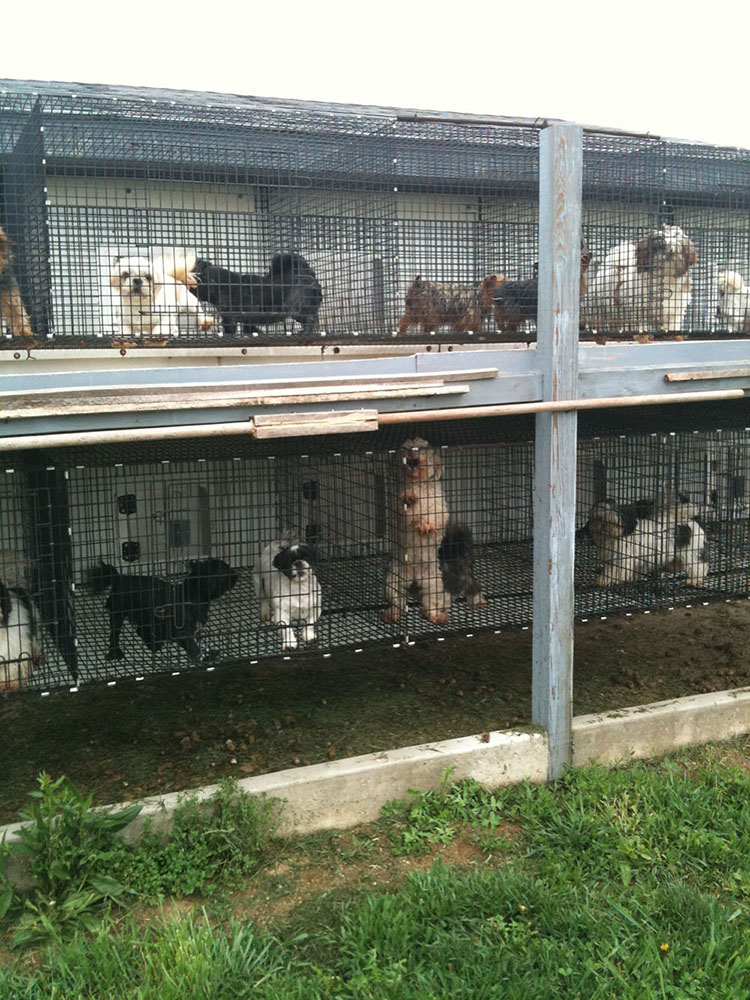
    The Humane Society (HSUS) defines a puppy mill as “a dog breeding operation, which offers dogs for monetary compensation or remuneration, in which the physical, psychological and/or behavioral needs of the dogs are not being fulfilled due to inadequate housing, shelter, staffing, nutrition, socialization, sanitation, exercise, veterinary care and/or inappropriate breeding.” The PROBLEM with purchasing from a Puppy Mill is that we are exasperating the issue and those behind the veil of online and Pet Stores will continue.

    “It is estimated that there are at least 10,000 puppy mills in the United States…25% of the puppys are sold to Pet Stores.” https://www.humanesociety.org/puppy-mill-research

    Let me share with you what happened two and a half years ago. I didn’t know what the conditions of the puppy’s home was from the pictures; I was lured in by the puppies. I was in contact with the Breeder for a few months, asking for parent’s health (OFA testing, proof of parents lineage, etc.) and a few phone calls, but I hadn’t decided what I would do. I found her website full of testimonies and pictures. When I was suddenly called by the husband, asking if I had made up my mind, my red flags started waving. He let me know he was desperately in need of help from “someone like me” because his wife just passed away (literally the night before) and he was overwhelmed.

    Rallying the troops, I called and e-mailed every Cavalier King Charles Spaniel Breeder that I could reach and let them know of this desperate situation, hoping SOMEONE would help this poor man! A few days later my husband and I were on the road, driving the 15 hours it took to reach this man, more importantly the dogs and puppies that I just “knew” needed to have some help. I had NO idea what we were facing, I just knew there were a LOT of dogs and puppies who needed homes immediately.

    Luckily, I found a CKCS breeder a few miles from this mans home and she agreed to meet me there. We were greeted and had a “preliminary meeting” outside the home to discuss the “situation”. Again, when pressed, he had NO idea how many dogs or puppies there were needing adoption, but he was willing “to do whatever needed” to liquidate his kennel immediately. I had 4 breeders from all over the United States and Canada awaiting to hear what was going on and who bred the dogs that were living in the home. I was hoping to send many dogs back to the Breeders who had originally sold to this couple.

    As soon as I opened the door, I was aghast! I had NO IDEA people lived like this, much less, the many, many dogs! There were quite a number of dogs running around the house, but, the worst part was the double-stacked, hard plastic carrier crates that were lined up along the hallway with about a dozen dogs. Apparently I only saw the females, I have no idea how many males lived “outside in the garage” and there were a few litters of puppies in the main bedroom and bathroom, closed up, zip-tied to the area. I was mortified! I couldn’t stand to be IN the house. I wanted out, and I wanted the dogs and puppies in another, better condition. Our heart wasn’t so much in it to adopt any of them (is it ever?) but at this moment I was wishing I had a bus and the ability to take them ALL (and rehome them to the amazing people I have met over the years). The filth, the stench, the conditions…were completely inhumane.

    Within just a few minutes of arriving with the other Breeder, a relative of the woman who passed walked in and shouted, “Uncle, get your things in order. All the animals will be removed from the premises within a half-hour.” ASPCA was en route and the dogs and puppies were leaving, the last count that I heard was 22 adult dogs and 9 puppies removed, not to mention the exotic birds and horses that were (un)kept on the property. I was ecstatic, and completely mortified. I hated the situation these dogs and puppies were living in, but being RESCUED meant there was hope for a healthy, happy life afterward. This, ugh, is the picture of disdain that so many have in their minds when they (unfortunately) think of any type of animal breeders; thanks to the news and other forms of media. This is also why I am writing this blog post…and why I want to reform our thinking about what “Purebred Breeders” (of any sort) could/should be!

    We drove home, slowly, after speaking with the very upset Breeders across the country, not knowing where the dogs/puppies came from, and where they would be going. I had no idea WHY I made this trip, but if, for nothing else, I wanted to see this “Puppy Mill Practice” and never, ever come anywhere near identifying myself as “that”.

    My daughter, Emily, is a Certified Nurses Assistant. Weekly she tells me of the sad conditions of one of the houses where she cares for an elderly woman, nearly blind, who breeds dogs in her tiny apartment. She keeps and raises the puppies in a baby playpen their entire life and sells them between 6-7 weeks old. They run and roll in their filth all day long. Her client sells the puppies to Pet Stores as well as people on line, who will never meet the parents or see the conditions of the home that the puppies have been bred into. I give her advice of calling the local Humane Society (1-877-MILL-TIP ). Apparently there are so many of these “backyard breeders” that 20,000 puppies annually are sold through these types of systems with no accountability or measures for improvement. As long as people continue to purchase through illegitimate means, there will be pound puppies and sick dogs in society. HSUS defines a puppy mill as “a dog breeding operation, which offers dogs for monetary compensation or remuneration, in which the physical, psychological and/or behavioral needs of the dogs are not being fulfilled due to inadequate housing, shelter, staffing, nutrition, socialization, sanitation, exercise, veterinary care and/or inappropriate breeding.”

    This past July I was contacted by a local Portlandian who works closely with the Humane Society. As of such, she would “feel too guilty buying a dog when we see dogs put down due to overpopulation”, but wanted to let me know she would gladly accept a purebred Cavalier, should I know of one who needs to be rehomed. I find this thinking everywhere. In fact, having adopted several dogs from the local shelter, as well as being in a family who has adopted FIVE children from our local Foster System…I used to feel like I needed to constantly justify WHY I was BREEDING in the first place!!

    Falling in love with a breed doesn’t automatically give folks a license to be a Breeder. I have three very close friends (and relatives) who are Breeders of a variety of Dogs and I never wanted to do what they were doing. Truly, it was AFTER researching, seeing how HARD it was to find a healthy Cavalier King Charles Spaniel dog that I decided to make this challenge MINE. I went to the local dog clubs and shows, chatting with Cavalier King Charles Spaniel Owners all over the world (thanks to Facebook Groups like “Cavalier King Charles Spaniel Stomping Ground”, and meeting with and asking a million questions before launching into my “Breeding Career”. 7 years later, I am learning daily about the continuous needs and challenges that this breed holds…something I believe that can slowwwwly overcome together. In fact, it has become my goal of having the World’s Healthiest Cavalier King Charles Spaniels – world over! I KNOW this will not be an easy task. I have purchased about a dozen dogs, but have had to prematurely retire 7 of these due to anomalies within the individual dog that would not make this a great dog to use in my Breeding practices.

    Some of the dogs in my early years

    Having found the “Club” Standards (each pure bred dog has a Club) for the USA CKCS http://www.ckcsc.org/ckcsc/ckcsc_inc.nsf/Founded-1954/breedinfo.html I then began looking for Breeders who were adhering to the Club and AKC’s Standard Policies. Easy? No, unfortunately. I was blinded by the lack of accountability and standardization with regard to the policies that do not seem hard to follow. Having purchased puppies as well as “teen aged” dogs, I go through the same process I would anticipate others to go through to find me (typically using the AKC Marketplace: https://marketplace.akc.org/breeder/kalama-cavaliers-kennel?source_breed=cavalier-king-charles-spaniel ). I ask about the varies testings the dog and his parents have been through and then I ask for a visit. These are important and, often, denied. Just as I, as a Dog Breeder will interview each potential Adoptive Family, I expect folks to interview me! AKC has a great “Questions to ask a Potential Dog Breeder” here: https://www.akc.org/expert-advice/lifestyle/questions-to-ask-your-potential-breeder/

    Willy and son, Cody enjoying a romp through Old Colonial Williamsburg the first night we spent with our lovable Willy.

    If the breeder and puppies are too far away to visit while you are doing the research, ask for a full home/kennel video chat. Ask to see the Father and Mother and “look” for the dog’s normal living environment – where s/he eats, sleeps and plays. Insist on going ON SITE to see the condition of the parents, puppy and environment. Backyard Breeders often do not have Vet Records or Paperwork that shows they are upholding the standards and always improving the breed. Puppies should be frequently handled (immediately after they are born) and cared for and records for parents can be proven through the outside sourcing Orthopedic Foundation for Animals. I found Anna Button’s in South Carolina who had been breeding the CKCS’s 25 years and no known genetic issues to account for. She and I talked for months before I decided to fly out and pick out my 7 month old puppy Willy. Soon, thereafter I began to have Willy tested. I am an open book with my testing records, here is Willy’s Annual testing records: https://www.ofa.org/advanced-search quicksearch=Buttons%20Sir%20William

    For my purposes, and because it is so simple to do nowadays, I insist on seeing the parent’s DNA records hopefully showing some of the typical CKCS genetic diseases cleared (I use https://embarkvet.com/ ). If I am comfortable with all of the clearances and the environment that the pup/dog is coming from, I will send a Deposit (usually $500 or more) and prepare for the transportation home. If the travel is too far to drive, I always insist on meeting the Breeder at the local airport and NOT flying the pup/dog. The last thing I want is a dog/pup with PTSD (diseased or even dead) due to the flying conditions!

    Why is it so important to know the health of the parents? Besides telling you A LOT about the Breeders ethics, it will be an indication of what possibly is to come for your new puppy! I am an avid reader, researching constantly for ways to improve my Kennel and Breeding Standards. Today I can be found reading the 500+ page book “Epigenetics: The Death of the Genetic Theory of Disease Transmission”. I believe ethical breeders are always going to be pushing themselves into new territories.

    Part II of this Blog series will go into more detail with stories from people who have been duped…I want to help you avoid fiascos in your future. Have you ever been around a Puppy Mill? What did you do?