Tag: Washington State Cavalier King Charles Spaniel Breeder

  • Allergies and Pet Itchies

    Allergies and Pet Itchies

    Our lab Samson was fun and playful, but his night time scratching would keep us awake with the rattling of the floor.
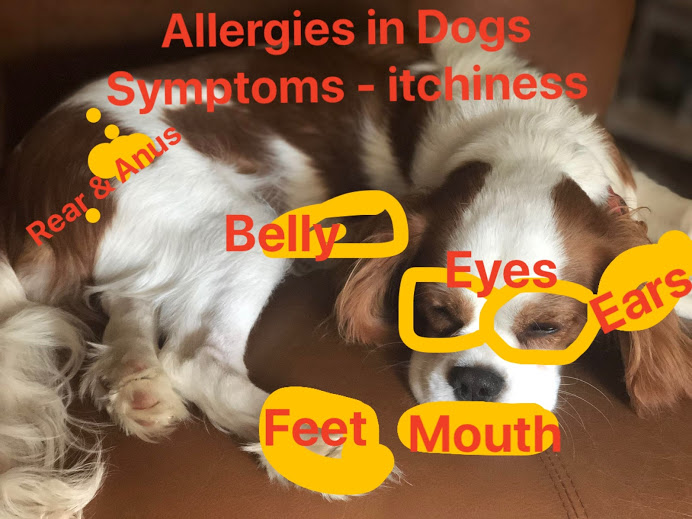
    Our model Breve (1/17/20) shows us where the typical allergy issues show up.

    Thump, thump, thump…no matter where the dog is, when they are itchy, it seems EVERYONE suffers with him. Samson, our lab seemed to suffer especially in the late spring, early summer. His ears would be red and inflamed, and his hind-iney was a big “need to scratch” area as well. We worked on his food, baths and a lot of natural products…nothing seemed to work…until the Vet gave a prednisone shot for his “Otitis”. A few years later, the Vet gave me a large dose of Prednisone tablets. At the earliest sign of that summer allergy, I would give 1/2 tablet and try and stay on top of his suffering.
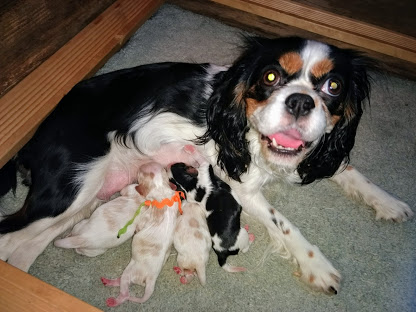
    Mercy’s hormonal itching typically dissipates after whelp.

    Mercy didn’t have issues except right before delivering puppies. Hormones also play a big part in the challenges of itching…and for her, there’s not a whole lot I am able to do for her…except time her contractions.

    Lovely Lovie’s post-bath and grooming ears.

    Pets often suffer with allergic otitis and dermatitis for a plethora of reasons. Your fur-baby may lose weight from the constant motion of scratching and rubbing. Sometimes the problem can be easy and cured with a few little things you have around the home, or, in so many cases, it will take years and a lot of expense to determine what is bugging little Fido!! I hope this article will help narrow the possibilities and expand your understanding of the mystery behind allergies. Allergy is defined as “damaging immune response by the body to a substance, especially pollen, fur, a particular food, or dust, to which it has become hypersensitive.” If you haven’t done so before now, be sure to read my blogs on ear care, which could also help with determining issues in those floppy ears: https://lifewithcavalierkingcharlesspaniels.com/spaniel-ear-care-part-1/

    There are three main culprits for allergies: environment, food and parasites, so similar to us humans!

    This may seem a little over the top, but in order to rule any of the possibilities of allergens out, you will need to keep track of the whens and whats in your fur babies life. I keep a Google Calendar on my Smartphone and have each of my pet’s in a color code to make it easy at a quick glance to see any important event, as well as be able to talk with your Pet Professional about the challenges.

    ENVIRONMENT: Does your dog ever “chew his paw pads”? Is your dog constantly battling with red skin and itchy? That’s one of the big red flags of environmental toxicity. Although pets can also experience hair loss, skin infections, sneezing, watery eyes, vomiting and soft stools. Here is a list of things he could be reacting to: floor cleaner (toxins), aerosol sprays, laundry soaps and dryer sheets, pesticide/herbicides, flea bites, molds, lice or mange. Definitely take a look at each thing one at a time and remove from his home completely (forever).
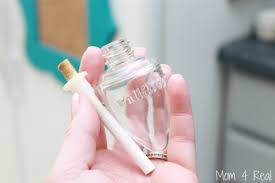
    DIY Air Fresheners

    TIP: 1/4 Cup Vinegar for a quart spray bottle (filled with water and a few drops of citrus essential oil) makes a fantastic cleaner as well as a foot soak, should your dog be needing a relief from his paw itchiness. I like to take a teaspoon of organic coconut oil and massage into his skin, its anti-fungal, anti-viral and anti-bacterial – it can bring comfort and heal. Also, if you enjoy the plug-in air refresheners, you might want to do something like I did: get the Plug-In type, dump out the liquid that is in them and add your own essential oil (1-2 drops is all that is needed) https://amzn.to/2QgovK3 Other things that could help is: detoxing, acupuncture and massage in order to boost your furry companions body.

    FOOD: Has this itchiness come on suddenly? A good thing to consider is a change in his food. You may be feeding the same thing, but Manufacturers are constantly changing recipes without your knowledge. Be sure to learn how to read the labels and if you can’t pronounce it…toss it! A limited ingredient pet food is a good way to begin looking at food as the culprit. As many of you know, I fish, garden and hunt for the majority of my pet’s food and when I’m looking at a new itchy dog, often it’s due to my negligence in this area. Other than being very itchy, food-related allergies can leave a dogs fur quite brittle in addition to sparse. If there are skin issues, I am sure to use a comforting oatmeal-type bath and shampoo such as this:https://amzn.to/3ldeqvk Here’s another plug for organic coconut oil is to feed a teaspoon each day. The MCT (Medium Chain Triglycerides) job is to boost the immune system. I personally use, as well as feed my dogs this MCT Oil: https://amzn.to/3hkYTaM

    Recently my year old Faithie was biting at her legs and paws. When I took the time to think through her diet, I realized that I had not skinned several pieces of the chicken that I used in her raw, ground food. It is my (not supported by proof) belief that it is not the chicken that many of our dogs are allergic to, but what the chickens are fed and then the bi-products of the chicken that is put into the food (such as my example above as well as feathers which is often found in kibble). Dr. Judy Morgan reminds folks that healing the gut is critical and necessary if we are ever to get on top of pet’s allergy issues: https://drjudymorgan.com/blogs/blog/you-cant-solve-allergies-if-you-dont-fix-the-diet?_pos=1&_sid=7addc8f07&_ss=r

    Tip: Hemo-Pet has a fantastic Food sensitivities and intolerances test that is both thorough and economic. For a great article and video click here: https://healthypets.mercola.com/sites/healthypets/archive/2011/07/26/a-great-tool-for-dogs-with-rumbling-tummy-gas-diarrhea-or-vomiting.aspx or, just see the page: https://hemopet.org/dog-and-cat-nutriscan/?utm_source=google&utm_medium=cpc&utm_content=nutriscan&utm_campaign=adword&gclid=Cj0KCQjwhIP6BRCMARIsALu9LfnLKeck8Ntwi5v24O5lSrsqT_4okiQPDV4WSPJ1lvdEWB6sCoTvov0aAh0dEALw_wcB

    Tip: No Bake Itchy-Be-Gone Treat Bites

    Mix Together and Roll (in powdered peanut butter – optional) into 1 Tablespoon cookies, refrigerate and use in a week or freeze: 1/3 cup MCT (or coconut oil), 2 Tbsp Pumpkin or Unsweetened Applesauce, 2 1/2-2 3/4 cup ground oat, spelt or quinoa flour, 1/4 cup Natural Peanut Butter

    Parasites: I cover most all that I possibly could in the blog I wrote: https://lifewithcavalierkingcharlesspaniels.com/fleas-ticks-and-other-parasites-its-getting-itchy-in-here/ If you have any further questions, don’t hesitate to ask!
  • “Leave it”

    “Leave it”

    Rocks, stick, toys, slippers and more sometimes end up in our fur-family members mouth; so when it is necessary to see a Professional for help? Is there anything we can do when we think it’s an Emergency Situation?

    “Breve’ is just not acting herself since our mornings walk and we aren’t sure what to do for her” was the call I received about a month ago from Tyler Whitlock and his worried fiance Mimi.

    Tyler and his sidekick, Breve’ (Kalama Cavaliers Precious Hopie born 1/17/20)

    I asked about a dozen questions and found out that four month old Breve had been her normal puppy self until right after the walk, so I immediately thought of toxins. I encouraged two capsules of charcoal and take her temperature (canines of all ages and sizes range from 101-103ºF) and to monitor her for any vomiting or defecating.They called and set an appointment with the Vet for 24 hours later, but felt she was declining so rapidly that they decided to bring her into the Emergency Vet immediately. When they did so, the x-ray showed “some large object, resembling bone” in her bowels. The Vet office felt it best to have Breve remain overnight, being monitored and keeping her on IV fluids. Worried pet parents had to wait through the night and into the next day, hoping for the call that things were okay. The Veterinarian was hopeful Breve would pass the “bone”, but wanted to ensure she didn’t have any problems doing so. Sure enough, around 5:00 pm, apx. 30 hours after their walk, Breve had a stool that showed the nemesis – a rock. Apparently Breve has been habitually mouthing “everything in sight”, including rocks of all sizes. She is leash walked, and her parents keep attempting to have Breve spit those treasures out, but, apparently this “huge bone-type substance” was suuuuper uncomfortable for baby girl.

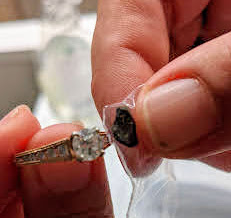
    I had Mimi put the rock next to her shiny engagement ring for me to compare the difference. As you can see…both of these “rocks” were quite an expen$e. Sooo, what do YOU do when you are faced with a similar problem?

    A quick search of ingesting non-food-related items will shine the spotlight on Pica. Websters defines Pica as “Craving and chewing substances that have no nutritional value, such as ice, clay, soil, or paper.” A fairly normal condition, particularly with teething puppies who are learning his/her environment, they also crave a variety of foods and minerals, but could point, especially in older dogs, to underlying conditions. Always speak to your Vet about concerns.

    When they are young, puppies can learn a new habit a day. We, their Guardians, get to help them learn GOOD habits and training toward success. My Dog Trainer, Marjorie Geiger of “Banner K-9 Training” (155 Elm, Kalama) reminded me of my need to have separate commands of my “Down” and “Off” – which sometimes has been used interchangeably. Similarly, “Leave it” and “Drop it” are essential to training for our dogs, as Kaelin Munkelwitz (of “All Things Pets”) points out in her easy to implement training video: https://www.youtube.com/watch?v=4cQNc2-nn_8 This video has helped me particularly with my rabbit and deer poop eating (and rolling in) dogs. I’m not at 100%, but working toward that goal.

    Healthy, long lived, dogs come from families that make their well being their priority. Food, nutrition, rest and training need to be a daily habit for your fur baby. You’ve committed a lifetime to this dependent love bug, now you need to hone the time to be building on the training of the past. You CAN teach old dogs new tricks…with a ton of praise and consistency.

    Kalama Cavalier’s Lady Gracie loves her Chewies

    Gracie never outgrew her Puppy gnawing, mouthing, chewing. She ALWAYS had something in her mouth, or else, she would be digging (couch, bed or dirt) to find or bury her treasures. So, when her owner, Ashley Butler called me to let me know that Gracie “was fine during my lunch break, but when I walked in the door around 5 pm it looked like someone had been murdered”, we both knew SOMETHING AWFUL was happening. Blood work and barium x-ray showed that she had a bowel blockage with a sever in her bowel. They had to go in to do immediate surgery and an overnight stay. Ashley and her family believe that Gracie most likely, swallowed a few too many bark chips! Ugh, really?! I read in “Dog’s Naturally” that if not caught, a dog could lose so much blood during a bowel obstruction that the dog could quickly die. https://www.dogsnaturallymagazine.com/bowel-obstruction-in-dogs/

    Aside from a high temperature, it’s important that anytime something is “off” with our dogs, we take note. I might scribble something on a wall calendar or on my phone ie: Faithie didn’t eat breakfast and seems lethargic this morning. In conjunction with bleeding, bloating, vomiting, severe diarrhea, I will most likely get in to see the Vet asap.

    If the symptoms don’t seem to slow my doggie down, I might note it and then see if there is something natural I can do to assist my pooch. Here are a few of my go-to’s in my Pet First Aid Kit (I will be doing an entire blog about 1st Aid in the near future):

    • Gurgling Tummy accompanied by grass/herb eating, I will give 1 capsule of Slippery Elm Bark (I usually roll in a bit of cream cheese or deli meat: https://amzn.to/31aasMH
    • Diarrhea or constipation? I will add a teaspoon of Canned Pumpkin (no seasonings) in the food until the bowels have returned to normal.
    • If I suspect a toxic substance has been ingested, I don’t hesitate to give 1-2 capsules of Activated Charcoal, until pup can be seen by the Doctor or the symptoms have dissipated (see story below about Lovie’s rat poison “treat”): https://amzn.to/2Vb3y5U
    • Plain Pedialite – if there has been a bout of diarrhea, I might give some to re-hydrate. I also keep some organic bone broth on hand (this is a convenient, easy way to store): https://amzn.to/3duYsI0
    • Hydrogen Peroxide: have a small, unopened container on hand that has not expired at all times, should you need to induce vomiting.

    Moving furniture in our Guest Room proved to be a lot bigger challenge than I had pictured. Not only was the Queen Bed not fitting in the area I wanted, but the heavy Queen Anne 12-drawer dresser was a 3-man job. When we were finished in that room and ready for a cold drink, I was surprised to hear my normally quiet and calm husband shouting “Help me! She got it”! Sweet and docile, 2 year old Lovie was in and out of the room while we were reassembling our puzzle-of-furniture maze. There was a TRAIL of green particles all the way down the hall and into the great room. It happened so fast, I was unsure of what had just taken place.

    Who me? Kalama Cavalier’s Madam Lovie…after our scare!

    At the end of the trail was Lovie chewing on the hard green mouse/rat bait that had apparently been under one of the pieces of furniture…highly toxic to anything that ingests it. It was late, we live over an hour from the Emergency Vet…so, we dove for the charcoal and hydrogen peroxide. In that first hour I gave her 5 activated charcoals. She never did vomit because we found out later that the bottle hydrogen peroxide had expired. Two hours and a few meals later (to dilute and push through) she had a GREEN AND BLACK bowel movement! We stayed up all night monitoring and walking our baby girl and by 8:00 the next morning we were at the Vet’s Office. They took a quick look and said we “did everything they would have done” except that they gave us Vitamin K-12 to assist with blood coagulation, should she have a bit of the bait still in her body. Needless to say, we have tossed all the baits and toxins out and have opted for a more natural approach (“here, kitty, kitty”).

    Another UNBELIEVABLE story of swallowing is about Finn. When Finn(agin) was about 6 months old, Kari McPherson’s boy was gnawing on his nightly bully stick at her feet. These were the sticks the Breeder (me) recommends for teething as well as a quieting/calming for puppies. Kari was shocked when, 5 minutes later, her pup acted like he lost his special stick. The family frantically began to tear the area up, hoping he didn’t swallow it. Just to be certain, they took that scary drive to the Veterinarians office for the x-ray that showed he HAD indeed swallowed “something” and it was already passing down into his intestines.

    Bella’s boy Finn (1/19 litter)

    Kari shares: “We stayed at the vet the entire time until the bully stick passed into the intestines. It was lodged down his throat and into the upper part of his stomach when we arrived. It took about 4 hours for that process to happen and for the x-ray progression to show it was going to pass. Most heartbreaking was his horrible painful cries as it was poking him so badly from the inside! The bully stick was still 3/4 of its size when he swallowed it whole. I will NEVER feed a bully stick again!” I understand completely. It’s those scares that change our world around.

    The BOTTOM line is know your dog…yes, inside and out. You are its advocate now…be that Super Sleuth in all departments. Keep an eye on any changes…so you can make a difference in his life (sooner rather than later)!

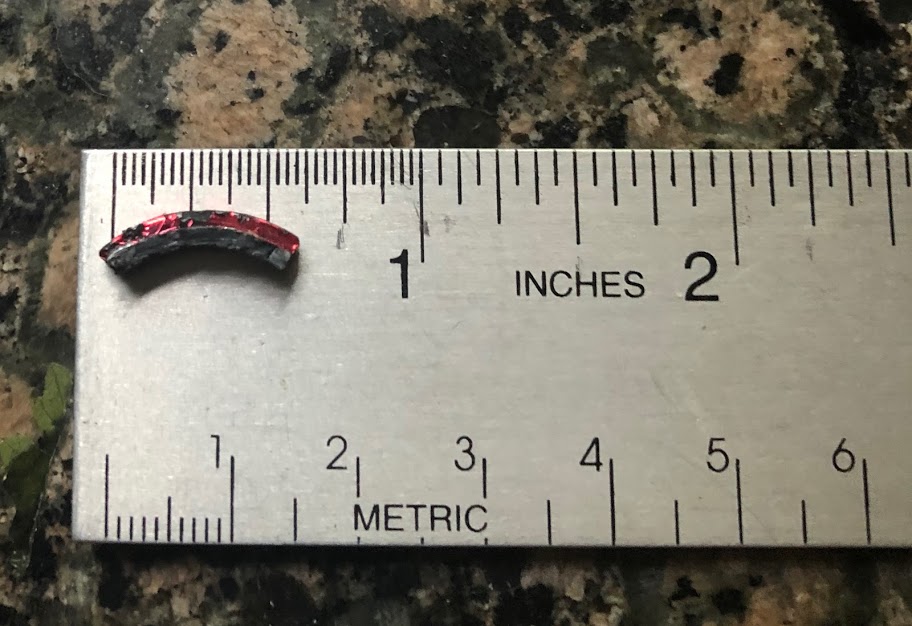
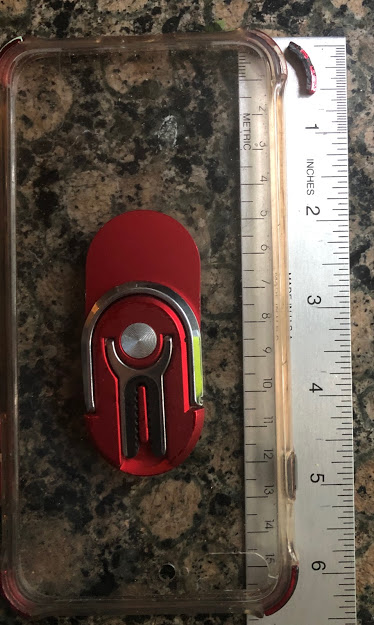
    It’s only because I LOOKED that I saw this…what I now know is a corner piece to my cell phone cover, in Libby’s poop a few weeks ago! She wasn’t lethargic and I had been walking her on a leash the night before, so I knew that she was not constipated. Below is the slide show of “Kalama Cavalier’s Lady Liberty” aka: Libby and her “treasure” as well as a few pics the same week including with her 2 moth older sister Breve’:

    I don’t normally see bright red shiny things in the poop, so, being the advocate that I am, I used a stick and a leaf and brought it to the sink to scrub up (what you see is a clean metal piece). Wow! That was a CLOSE call!! Little 3 month old puppies are naturally curious, and this was hard, shiny and very pokey!

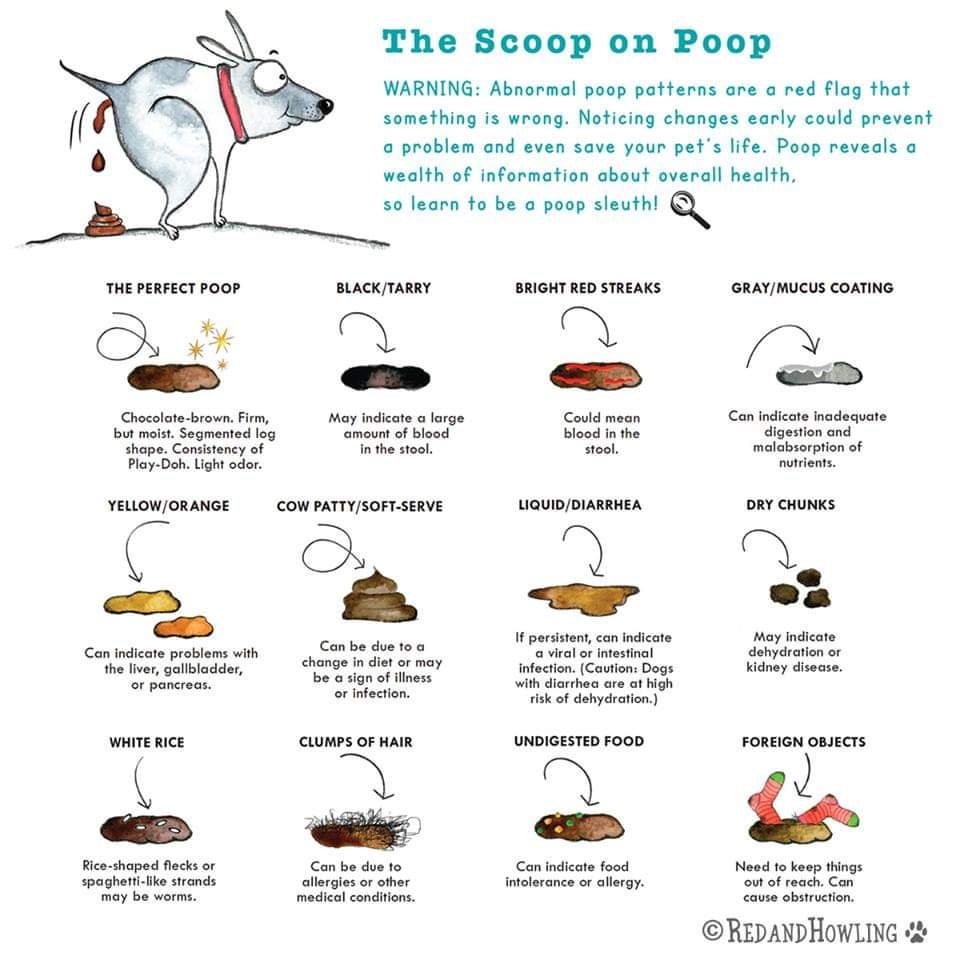
    Just as this article points out, keeping our dogs neurologically stimulated helps them in the long run: https://www.k9ofmine.com/stop-dog-from-eating-rocks/ The bottom line here is: KNOW YOUR DOG’S “NORMAL”. Study the breed and do “right by the dog” as my friend Lynda S. Cantwell is heard saying. This chart is a fantastic help for those of us who want to know “what is going on with my dogs poop?”

    What about you? Have you ever had your furry companion swallow something that scared both of you? How did you handle this challenge and or problem? Help others by droping a Comment below or sharing this article.

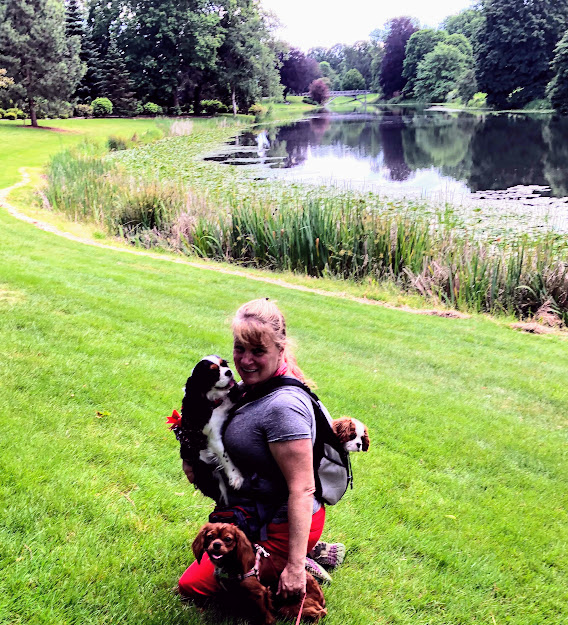
    A few of my girls and I on a 3 mile walk around Lake Sacajawea in Longview last week. The baby got the pack while the older girls got to walk and say “hello” to everyone.
  • Puppy Mill or Reputable Breeder? How can we really tell?

    Puppy Mill or Reputable Breeder? How can we really tell?

    There are many ways to bring a new furry four-legged friend into our family: going to the Humane Society and choosing a dog (“rescuing”); the local Pet Store usually has an Adoption Day; there’s always the online Marketplaces and Word of Mouth. So, what’s the big deal and why should we care?

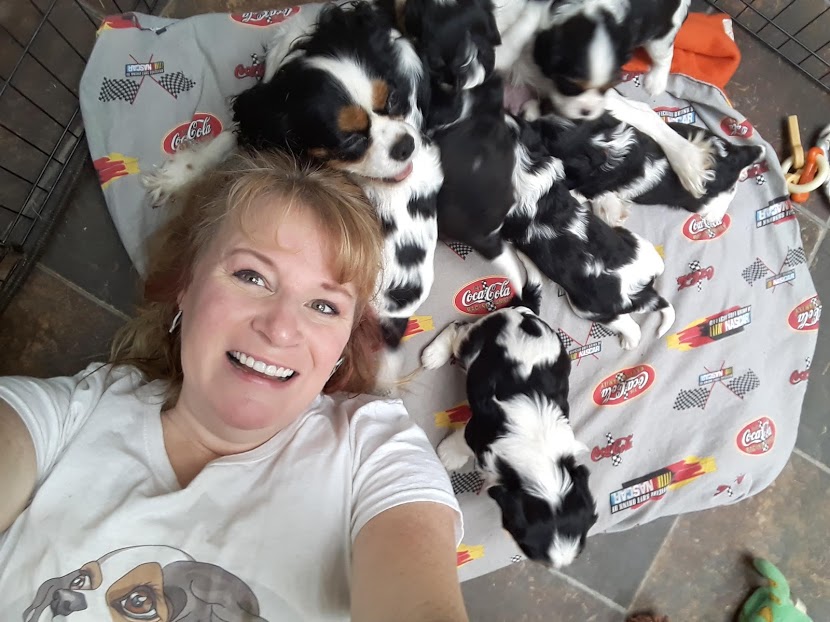
    Mercy and I, playing and snuggling in the Puppy Nursery this past February.

    Looking into those sweet eyes and digging your fingers into that clean, soft fur, it’s hard to fathom the life before this “moment of decision” when you decide whether you will bring him home to be part of your fur-ever family. I want to help shed light on terrible practices, as well as offer solutions to bringing a happy, healthy dog/puppy into your life.

    The Humane Society (HSUS) defines a puppy mill as “a dog breeding operation, which offers dogs for monetary compensation or remuneration, in which the physical, psychological and/or behavioral needs of the dogs are not being fulfilled due to inadequate housing, shelter, staffing, nutrition, socialization, sanitation, exercise, veterinary care and/or inappropriate breeding.” The PROBLEM with purchasing from a Puppy Mill is that we are exasperating the issue and those behind the veil of online and Pet Stores will continue.

    “It is estimated that there are at least 10,000 puppy mills in the United States…25% of the puppys are sold to Pet Stores.” https://www.humanesociety.org/puppy-mill-research

    Let me share with you what happened two and a half years ago. I didn’t know what the conditions of the puppy’s home was from the pictures; I was lured in by the puppies. I was in contact with the Breeder for a few months, asking for parent’s health (OFA testing, proof of parents lineage, etc.) and a few phone calls, but I hadn’t decided what I would do. I found her website full of testimonies and pictures. When I was suddenly called by the husband, asking if I had made up my mind, my red flags started waving. He let me know he was desperately in need of help from “someone like me” because his wife just passed away (literally the night before) and he was overwhelmed.

    Rallying the troops, I called and e-mailed every Cavalier King Charles Spaniel Breeder that I could reach and let them know of this desperate situation, hoping SOMEONE would help this poor man! A few days later my husband and I were on the road, driving the 15 hours it took to reach this man, more importantly the dogs and puppies that I just “knew” needed to have some help. I had NO idea what we were facing, I just knew there were a LOT of dogs and puppies who needed homes immediately.

    Luckily, I found a CKCS breeder a few miles from this mans home and she agreed to meet me there. We were greeted and had a “preliminary meeting” outside the home to discuss the “situation”. Again, when pressed, he had NO idea how many dogs or puppies there were needing adoption, but he was willing “to do whatever needed” to liquidate his kennel immediately. I had 4 breeders from all over the United States and Canada awaiting to hear what was going on and who bred the dogs that were living in the home. I was hoping to send many dogs back to the Breeders who had originally sold to this couple.

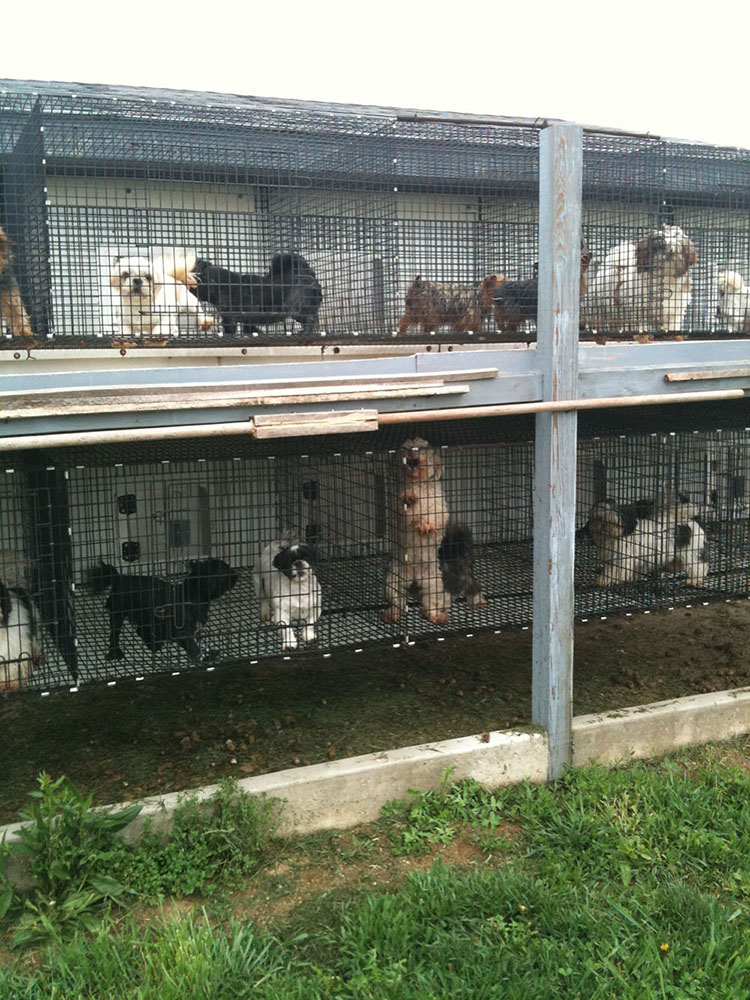
    As soon as I opened the door, I was aghast! I had NO IDEA people lived like this, much less, the many, many dogs! There were quite a number of dogs running around the house, but, the worst part was the double-stacked, hard plastic carrier crates that were lined up along the hallway with about a dozen dogs. Apparently I only saw the females, I have no idea how many males lived “outside in the garage” and there were a few litters of puppies in the main bedroom and bathroom, closed up, zip-tied to the area. I was mortified! I couldn’t stand to be IN the house. I wanted out, and I wanted the dogs and puppies in another, better condition. Our heart wasn’t so much in it to adopt any of them (is it ever?) but at this moment I was wishing I had a bus and the ability to take them ALL (and rehome them to the amazing people I have met over the years). The filth, the stench, the conditions…were completely inhumane.

    Within just a few minutes of arriving with the other Breeder, a relative of the woman who passed walked in and shouted, “Uncle, get your things in order. All the animals will be removed from the premises within a half-hour.” ASPCA was en route and the dogs and puppies were leaving, the last count that I heard was 22 adult dogs and 9 puppies removed, not to mention the exotic birds and horses that were (un)kept on the property. I was ecstatic, and completely mortified. I hated the situation these dogs and puppies were living in, but being RESCUED meant there was hope for a healthy, happy life afterward. This, ugh, is the picture of disdain that so many have in their minds when they (unfortunately) think of any type of animal breeders; thanks to the news and other forms of media. This is also why I am writing this blog post…and why I want to reform our thinking about what “Purebred Breeders” (of any sort) could/should be!

    We drove home, slowly, after speaking with the very upset Breeders across the country, not knowing where the dogs/puppies came from, and where they would be going. I had no idea WHY I made this trip, but if, for nothing else, I wanted to see this “Puppy Mill Practice” and never, ever come anywhere near identifying myself as “that”.

    My daughter, Emily, is a Certified Nurses Assistant. Weekly she tells me of the sad conditions of one of the houses where she cares for an elderly woman, nearly blind, who breeds dogs in her tiny apartment. She keeps and raises the puppies in a baby playpen their entire life and sells them between 6-7 weeks old. They run and roll in their filth all day long. Her client sells the puppies to Pet Stores as well as people on line, who will never meet the parents or see the conditions of the home that the puppies have been bred into. I give her advice of calling the local Humane Society (1-877-MILL-TIP ). Apparently there are so many of these “backyard breeders” that 20,000 puppies annually are sold through these types of systems with no accountability or measures for improvement. As long as people continue to purchase through illegitimate means, there will be pound puppies and sick dogs in society. HSUS defines a puppy mill as “a dog breeding operation, which offers dogs for monetary compensation or remuneration, in which the physical, psychological and/or behavioral needs of the dogs are not being fulfilled due to inadequate housing, shelter, staffing, nutrition, socialization, sanitation, exercise, veterinary care and/or inappropriate breeding.”

    This past July I was contacted by a local Portlandian who works closely with the Humane Society. As of such, she would “feel too guilty buying a dog when we see dogs put down due to overpopulation”, but wanted to let me know she would gladly accept a purebred Cavalier, should I know of one who needs to be rehomed. I find this thinking everywhere. In fact, having adopted several dogs from the local shelter, as well as being in a family who has adopted FIVE children from our local Foster System…I used to feel like I needed to constantly justify WHY I was BREEDING in the first place!!

    Falling in love with a breed doesn’t automatically give folks a license to be a Breeder. I have three very close friends (and relatives) who are Breeders of a variety of Dogs and I never wanted to do what they were doing. Truly, it was AFTER researching, seeing how HARD it was to find a healthy Cavalier King Charles Spaniel dog that I decided to make this challenge MINE. I went to the local dog clubs and shows, chatting with Cavalier King Charles Spaniel Owners all over the world (thanks to Facebook Groups like “Cavalier King Charles Spaniel Stomping Ground”, and meeting with and asking a million questions before launching into my “Breeding Career”. 7 years later, I am learning daily about the continuous needs and challenges that this breed holds…something I believe that can slowwwwly overcome together. In fact, it has become my goal of having the World’s Healthiest Cavalier King Charles Spaniels – world over! I KNOW this will not be an easy task. I have purchased about a dozen dogs, but have had to prematurely retire 7 of these due to anomalies within the individual dog that would not make this a great dog to use in my Breeding practices.

    Some of the dogs in my early years

    Having found the “Club” Standards (each pure bred dog has a Club) for the USA CKCS http://www.ckcsc.org/ckcsc/ckcsc_inc.nsf/Founded-1954/breedinfo.html I then began looking for Breeders who were adhering to the Club and AKC’s Standard Policies. Easy? No, unfortunately. I was blinded by the lack of accountability and standardization with regard to the policies that do not seem hard to follow. Having purchased puppies as well as “teen aged” dogs, I go through the same process I would anticipate others to go through to find me (typically using the AKC Marketplace: https://marketplace.akc.org/breeder/kalama-cavaliers-kennel?source_breed=cavalier-king-charles-spaniel ). I ask about the varies testings the dog and his parents have been through and then I ask for a visit. These are important and, often, denied. Just as I, as a Dog Breeder will interview each potential Adoptive Family, I expect folks to interview me! AKC has a great “Questions to ask a Potential Dog Breeder” here: https://www.akc.org/expert-advice/lifestyle/questions-to-ask-your-potential-breeder/

    Willy and son, Cody enjoying a romp through Old Colonial Williamsburg the first night we spent with our lovable Willy.

    If the breeder and puppies are too far away to visit while you are doing the research, ask for a full home/kennel video chat. Ask to see the Father and Mother and “look” for the dog’s normal living environment – where s/he eats, sleeps and plays. Insist on going ON SITE to see the condition of the parents, puppy and environment. Backyard Breeders often do not have Vet Records or Paperwork that shows they are upholding the standards and always improving the breed. Puppies should be frequently handled (immediately after they are born) and cared for and records for parents can be proven through the outside sourcing Orthopedic Foundation for Animals. I found Anna Button’s in South Carolina who had been breeding the CKCS’s 25 years and no known genetic issues to account for. She and I talked for months before I decided to fly out and pick out my 7 month old puppy Willy. Soon, thereafter I began to have Willy tested. I am an open book with my testing records, here is Willy’s Annual testing records: https://www.ofa.org/advanced-search quicksearch=Buttons%20Sir%20William

    For my purposes, and because it is so simple to do nowadays, I insist on seeing the parent’s DNA records hopefully showing some of the typical CKCS genetic diseases cleared (I use https://embarkvet.com/ ). If I am comfortable with all of the clearances and the environment that the pup/dog is coming from, I will send a Deposit (usually $500 or more) and prepare for the transportation home. If the travel is too far to drive, I always insist on meeting the Breeder at the local airport and NOT flying the pup/dog. The last thing I want is a dog/pup with PTSD (diseased or even dead) due to the flying conditions!

    Why is it so important to know the health of the parents? Besides telling you A LOT about the Breeders ethics, it will be an indication of what possibly is to come for your new puppy! I am an avid reader, researching constantly for ways to improve my Kennel and Breeding Standards. Today I can be found reading the 500+ page book “Epigenetics: The Death of the Genetic Theory of Disease Transmission”. I believe ethical breeders are always going to be pushing themselves into new territories.

    Part II of this Blog series will go into more detail with stories from people who have been duped…I want to help you avoid fiascos in your future. Have you ever been around a Puppy Mill? What did you do?